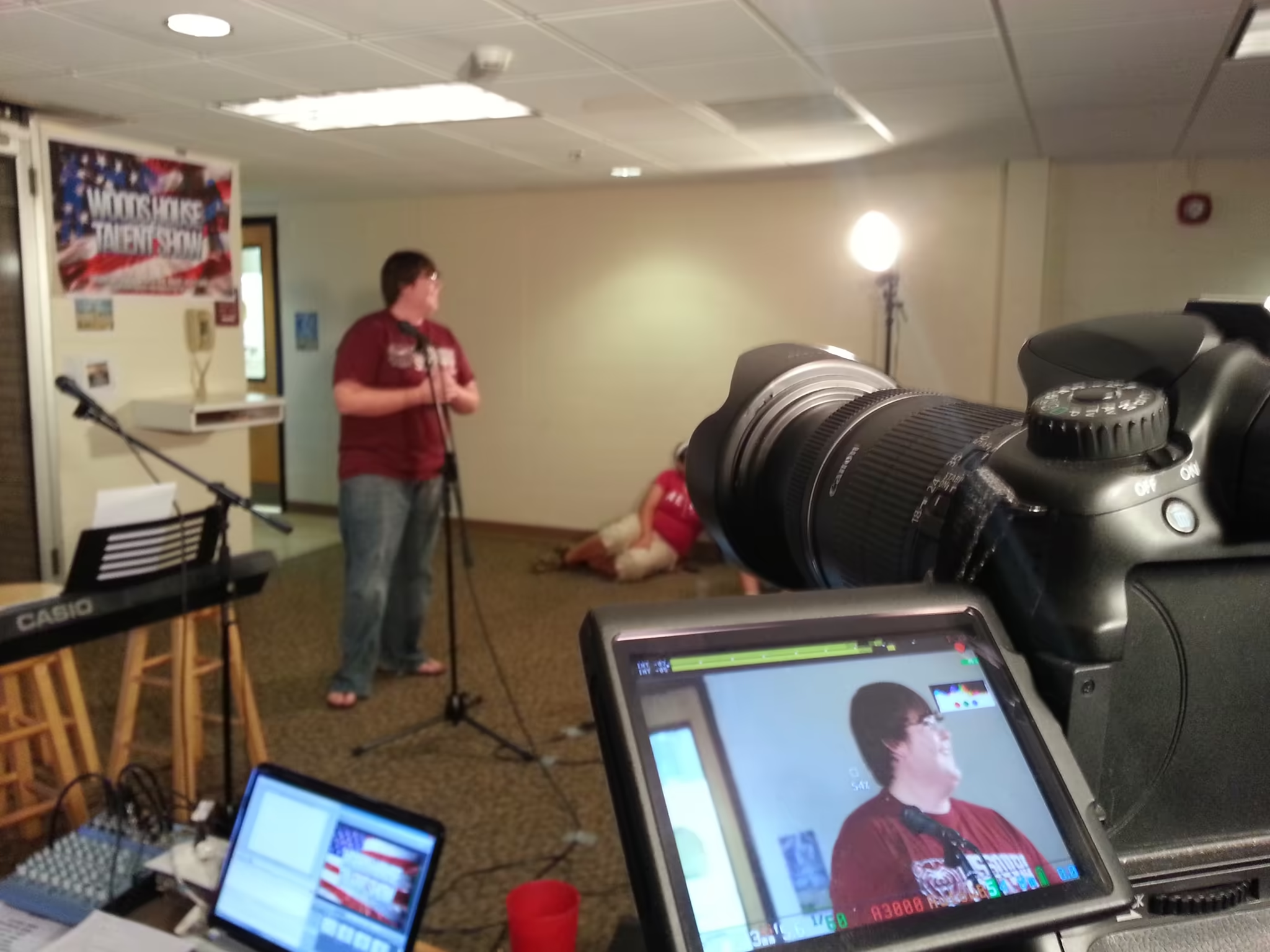
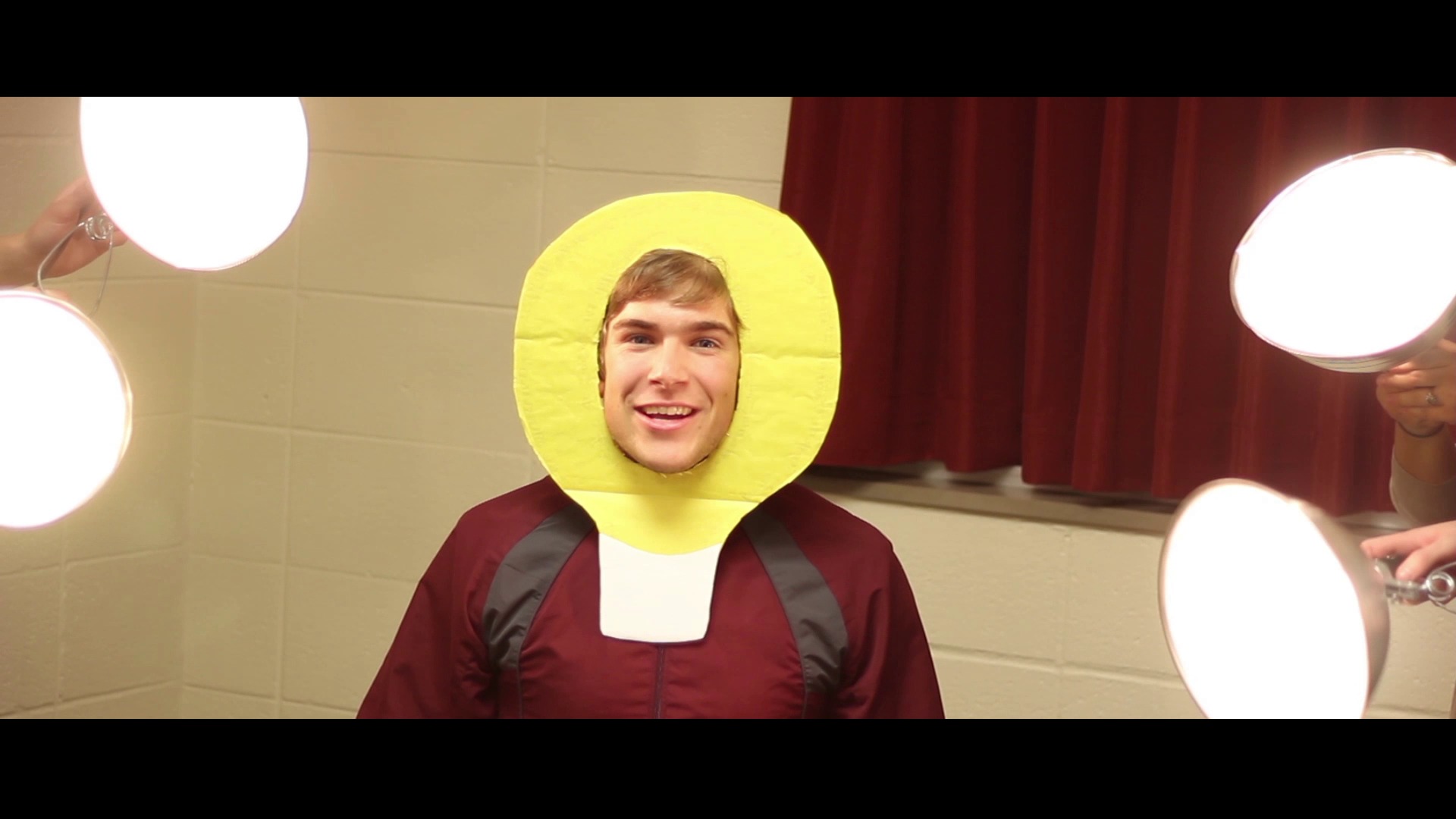
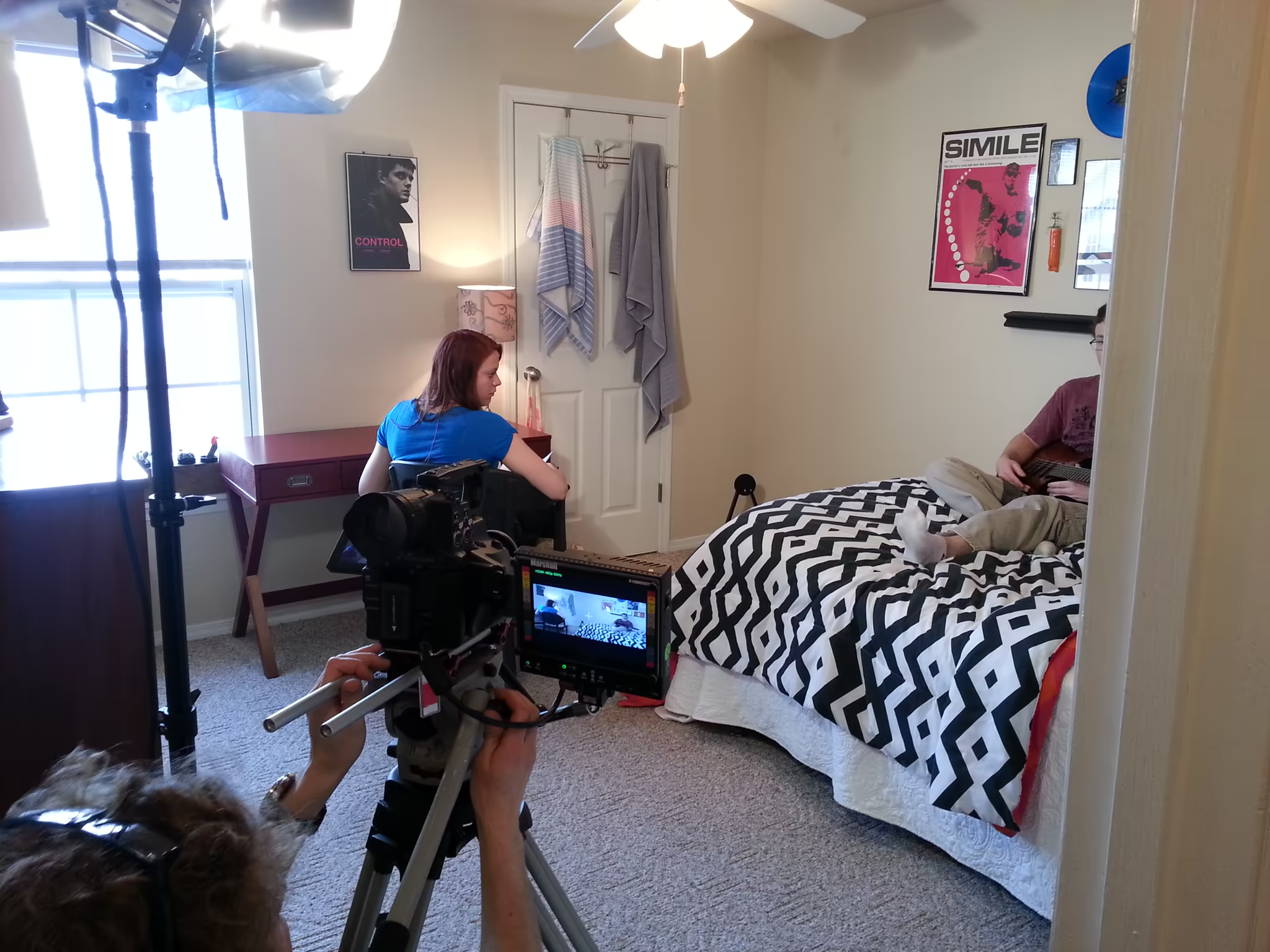
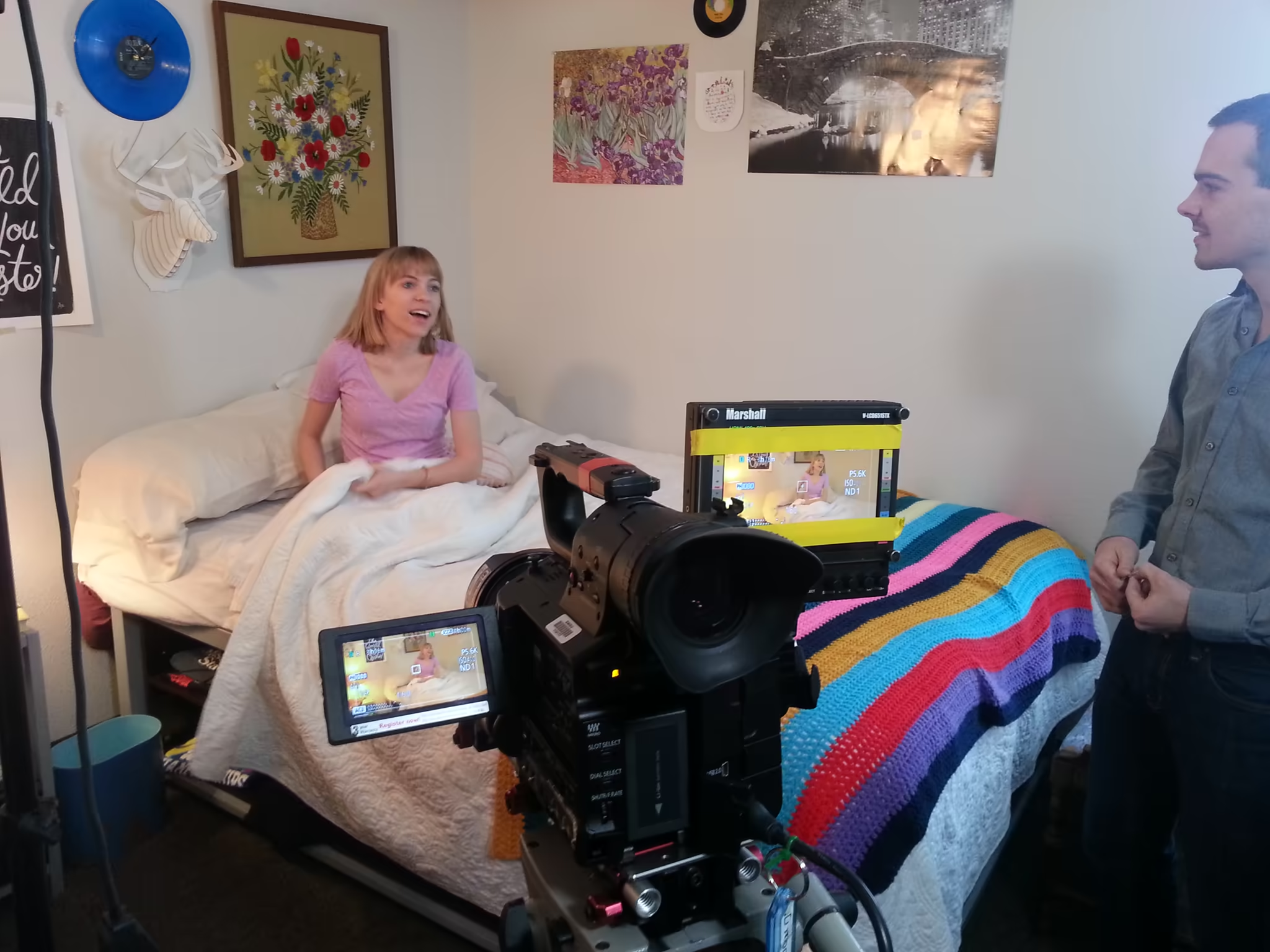
Katie Bauer's Breakup 2014
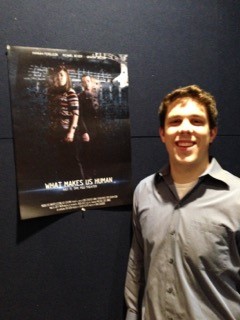
Directing-class group film. I script-supervised, edited, and did the VFX. The character realizes she's inside a film and tries to escape it; boom mic crashes the frame on purpose.
For as long as I have lived, I have loved to create. I've built startups, developed apps, and produced videos. I live to create. I work to delight.
I'm full-time building Show&Tour: a project-delivery platform for real estate photographers. Beautiful property websites, branded delivery pages, smart invoicing — the whole workflow built around how photographers actually work. Thousands of users and counting.
Before the startup, the apps, the company — there was a miniDV camera, a bedroom wall painted green, and a friend named Kevin.
My best friend Kevin and I were equipped with our family's miniDV cameras — the kind where you literally had to play the tape back into the computer in real time to digitize it. We had no filmmaking skills. We had no lights, no mics, no idea what a "script" was. But we had time, and that was the only thing the work required.
We called ourselves Hunky Spunky Productions. We were eleven.
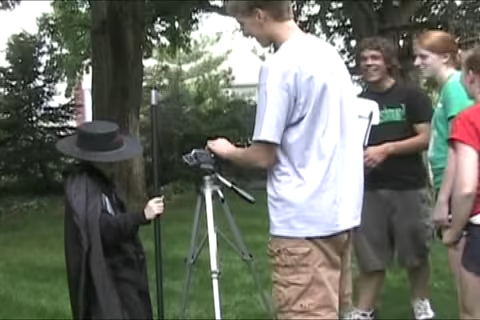
Setting up a tripod was hard. We thought we could film handheld — we couldn't. That meant one of us was always behind the camera. With only two of us, how do you make a film with only one character?
Film your stuffed animals.
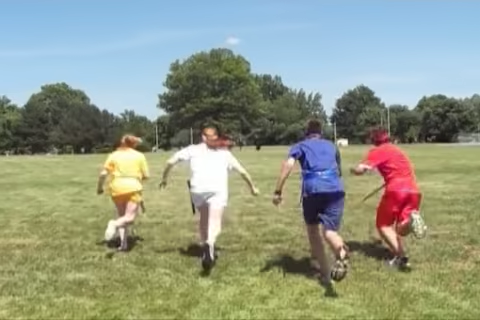
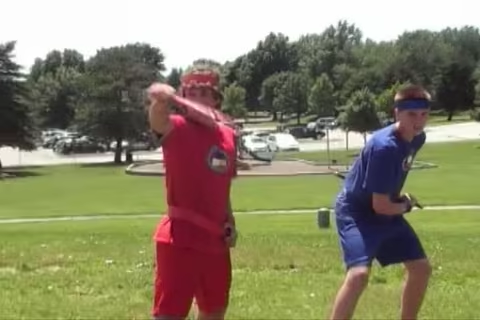
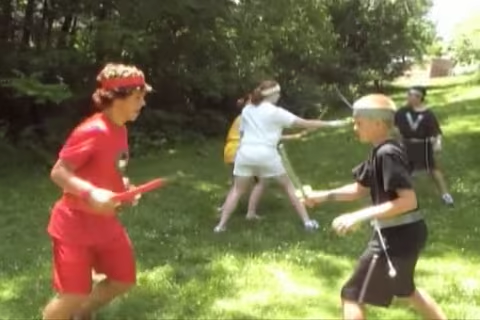
Our first big special-effects idea: act a fight in slow motion, then speed it up in editing so we wouldn't actually hurt each other. It turns out humans cannot act believably in slow motion. The footage is ridiculous. We kept it anyway.
A year after The Fight Scene we made Ninja Men. We pre-cut an apple, jammed a toothpick into it to hold it together, and let a karate chop "split" it cleanly. Seventh-grade ingenuity I'm still a little proud of.
These are bad. Some of them are wonderful-bad. They are where every other section of this page came from.
No script. No actors. Just two kids and a pile of stuffed animals.
A third friend joins. The plot? Mostly Turbana, a guy in a comically large turban.
We tried to act in slow motion so we could "speed it up" later. It does not work.
A class assignment "invention" — a 3-headed fly swatter — sold via fake infomercial.
Kevin's invention: a device that stops chairs from tipping over.
A year later. Pre-cut apple + toothpick = a karate-chop split that holds up.
A quest. For a spatula. Don't ask.
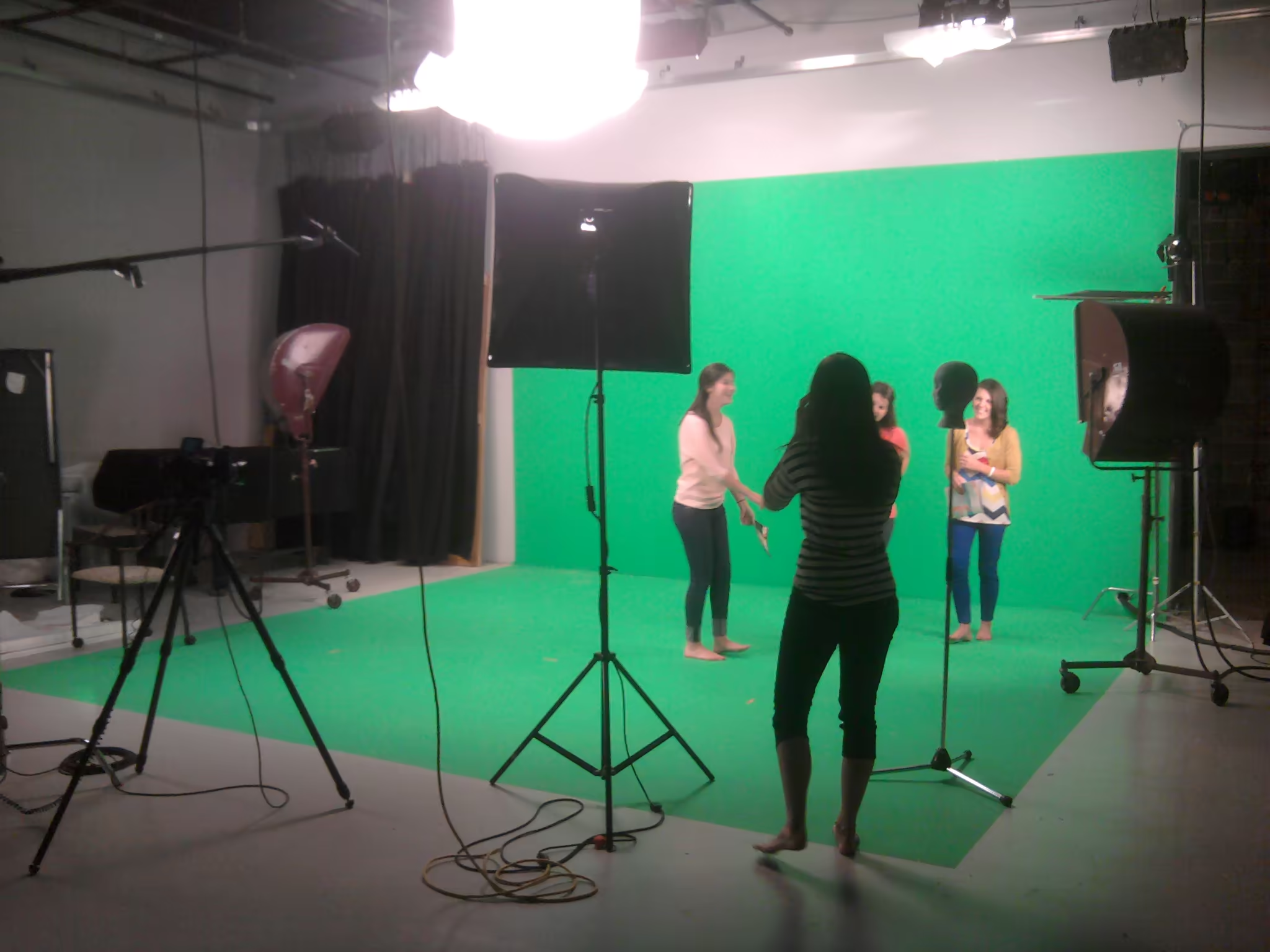
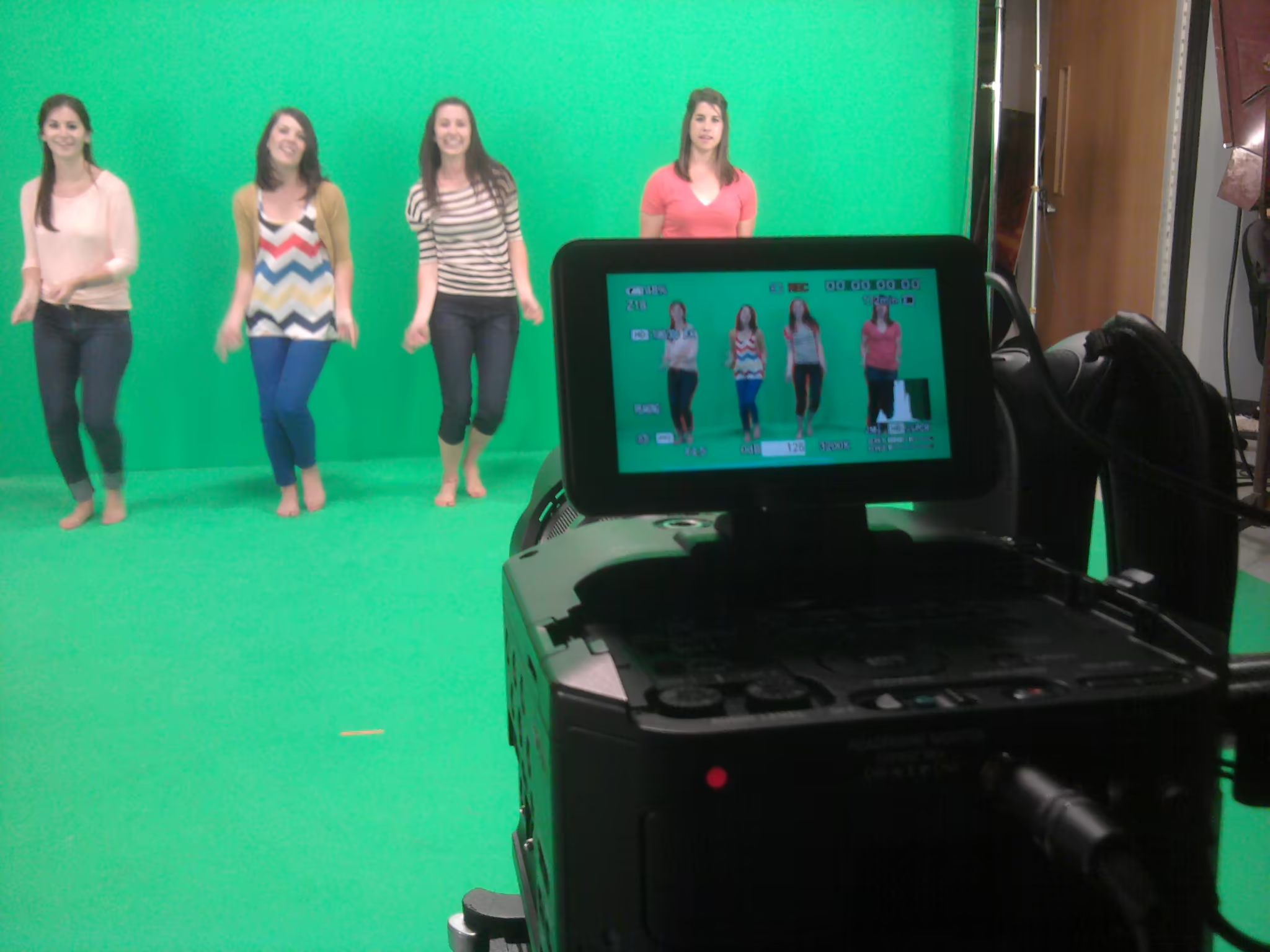
Our first film with a real script. Greenscreen, a soundtrack, multiple takes.
Newspaper contest: a 29-second short for leap day. Got 2nd place — and taught us quick cuts.
Suddenly the possibilities felt infinite. We didn't know how to use a chroma key. We didn't know what "chroma key" was. We knew our editing software had a button labeled "green screen". That was enough.
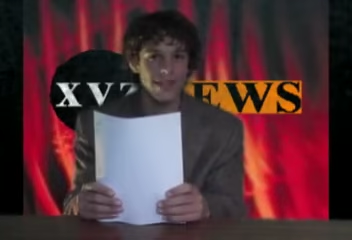
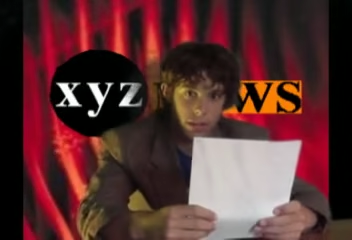
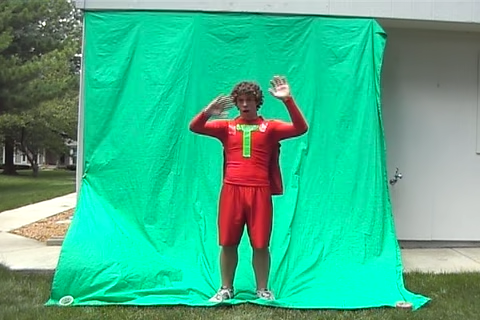
So we wrote up a fake news broadcast. XYZ News was born — Brian as the anchor, Kevin as every other character. The lesson we learned that day is etched permanently into my brain: use a tripod when you use a green screen, or your anchor will float.
The funniest thing we'd ever made, by a country mile.
We figured out a trick. Our editing software couldn't animate things. But it could do greenscreen. So we built our animations in PowerPoint, on top of a bright green slide, exported the whole slideshow as a video, and keyed out the green. Suddenly we had a pacman chomping his way across real footage.
We wrote a whole short film around the trick. A group of friends watching TV. Pacman climbs out of the screen. Carnage ensues.
I also built a small Flash game to launch with the film — you played a pacman eating animated faces. It was my first real taste of programming creating something on screen. I never forgot it.
Animated in PowerPoint, exported to video, on a bright green slide.
Key out the green in our editor. Pacman now lives in real footage.
Bonus: a Flash game launched alongside the film. Brian-faces. Pellets.
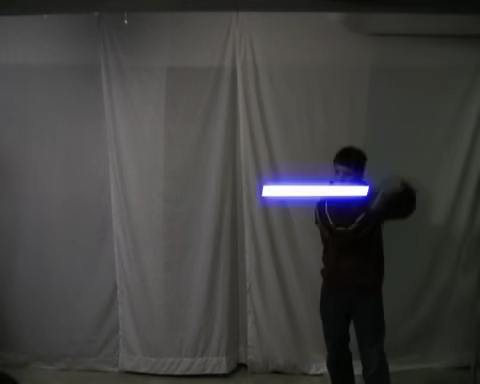
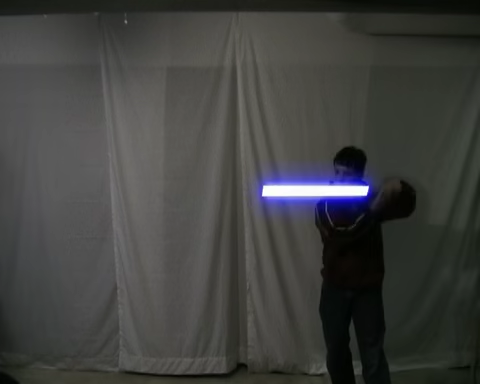
Our editor couldn't take us further. So I picked up After Effects and started running tests — every VFX artist's rite of passage. Clone yourself. Build a lightsaber. Get hit by a car. Animate a logo.
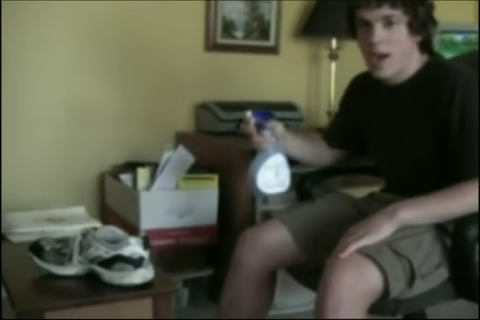
Once I learned After Effects had a "rotoscope" capability, I had to test it. Cut out a chair before it vanishes. Cut out a shoe. Stay locked-off on a tripod and let the trick do the work. We turned the test into a fake infomercial.
My sister Amanda "invented" a warm blanket with a waterproof shell for outdoor sports — basically a Snuggie you could take outside, before Snuggies existed. We made her a fake commercial that put her into rain, snow, and fire via green screen.
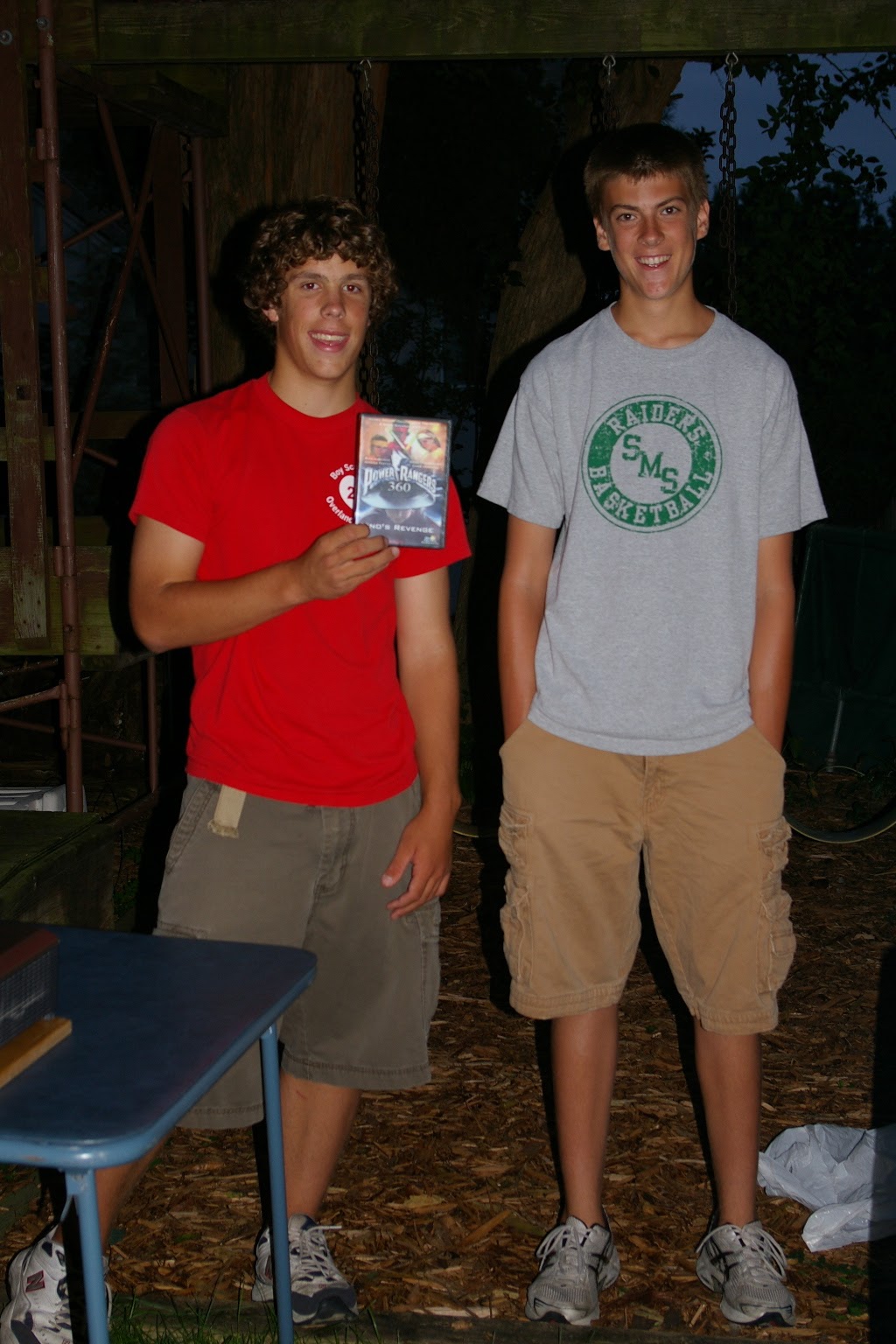
We'd spent two summers on short films. We were ready for the big one — a Hollywood feature-length movie. We didn't know how long a script needed to be, so we wrote until we couldn't write anymore. We didn't want to invent characters or world-building, so we borrowed an existing IP. We were thirteen.
Thirty minutes. Our first "feature". The blue ranger goes rogue, joins the villain Vino, fights the red ranger, dies in his arms. Our friends gave up their summer to be in it.
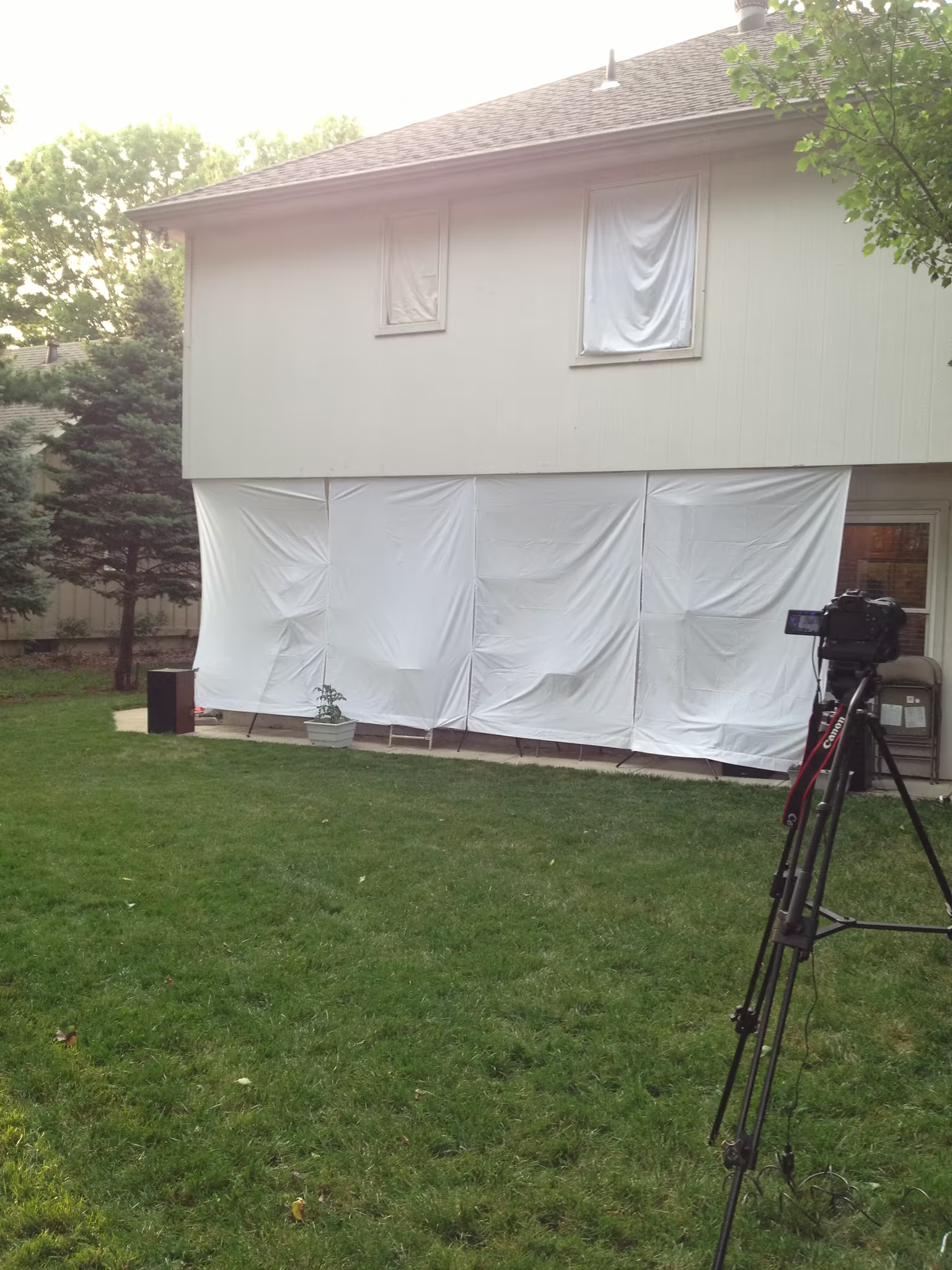
We held the premiere in my backyard. Bed sheets over the windows, a projector on a borrowed light stand, sundown. The "screen" was 20 feet tall. It was the biggest moment of either of our lives at that point.
We spent weeks writing. The script hit 60+ pages, printed into binders and handed out to a cast that, by then, had grown to a small army of friends. The result was 64 minutes long — counting the credits and a handful of scenes we left way too long because we were chasing a runtime. Worth it.
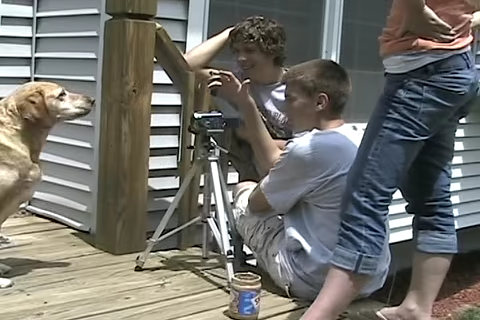
Zordon, the rangers' leader, was played by Kevin's dog. We filmed him "talking" via peanut butter and comped him into the scene with — what else — greenscreen.
We wanted Hunky Spunky Productions to feel like a real production company. We made t-shirts. We made hats. And of course — every real company has a website. So I went and bought our first domain name. I didn't really know what a domain name was. But I knew we needed one.
I fired up Apple's iWeb, which let me drag boxes onto a page and call it a website. It was perfect for someone who had no idea what HTML was. Pretty soon I outgrew it and moved to Adobe Dreamweaver. That meant I was actually writing code. Mostly badly. But I had crossed a line — I could make pixels do what I wanted, and the pixels could now do things on click.
Soon I was writing Flash. A custom Flash header for the homepage with faces that made funny expressions when you hovered them. Animated transitions between pages. Embedded films. A blog. Anything that felt "interactive" I tried to ram in.
When we released Calamity (a stop-motion lego film I'll get to in a later section), I built it its own little Flash website. It even had a Facebook "app" that embedded the same Flash player inside Facebook. Players could move a lego character around and watch its walk cycle animate. There were no objectives. No scoring. No win condition. That wasn't the point.
The point was: I could write code, and the code could make things appear on a screen. I was hooked. I have not really stopped since.
I was always drawn to music videos. You don't have to invent a plot or characters — you just get to mash a bunch of clips against a beat with quick cuts and clever transitions. It is the cleanest excuse to do editing exercises while pretending you're making art.
Our first attempts were honestly just "stand in front of a tripod and lip-sync". By 2010 we'd graduated to writing the songs ourselves, recording in our own awful little home studio, and building a music video concept around the lyrics. The audio-mixing skills we built here later carried into the sound design of every short film.
Our first original song, written and recorded with Kevin. A guy goes slowly insane searching for a flashlight he can't find. The music video has way more shots, way more quick cuts, and starts to actually feel like a music video.
We wrote a rap song for a friend, made him "into a rapper", filmed my whole family doing a goofy family dance to it — grandparents included — and shot the music video. It placed in a local film festival. I think second.
I also built a whole Flash website for the fake artist. There was a game on the site: press a number on the keyboard and the animated Flava G character would do that dance. We wrote four songs for him. We only ever shot a music video for one.
AP Calculus had just wrapped, so my teacher let us be creative. We wrote a parody — set to Britney Spears' "You Drive Me Crazy" — with lyrics full of calc puns. Shot it in class, used greenscreen to put the whole class into virtual sets, and turned in the most absurd math project the school had ever seen.
Gone were the days of PowerPoint exports keyed onto live footage. By 2009 I was deep into After Effects and learning Cinema 4D / 3ds Max. The software let me build the things I could only dream of three years earlier. The "I can put anything on screen" feeling didn't go away. It still hasn't.
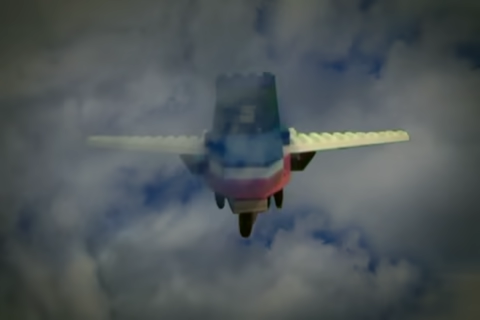
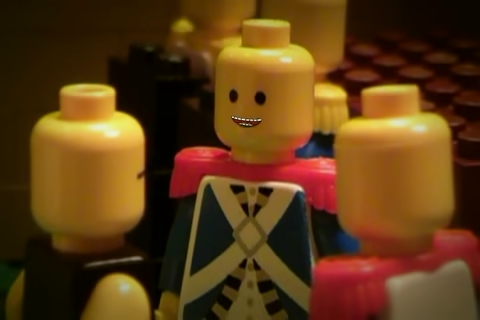
Calamity is a stop-motion short about a town of lego men attacked by a clay monster. We built a city on the floor of my basement, set a ladder over the whole thing so we could lay across it without getting in shot, and moved each lego one frame at a time.
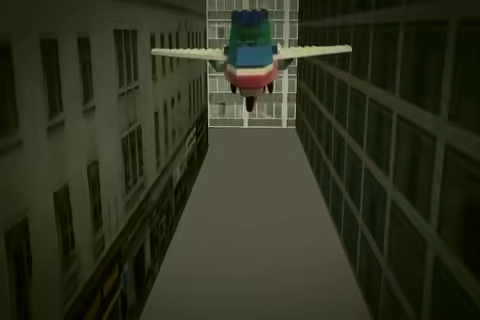
Then in After Effects, I painstakingly rotoscoped every character so I could replace the city behind them — explosions, fireballs, animated mouths, smoke, planes flying through the clouds. Every second has 3–4 VFX layers. It took an obscene amount of time.
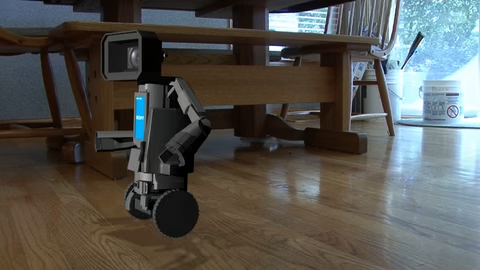
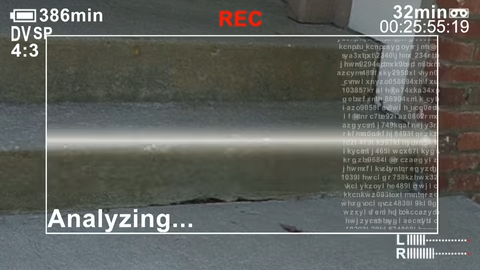
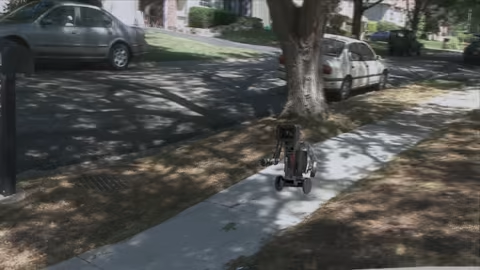
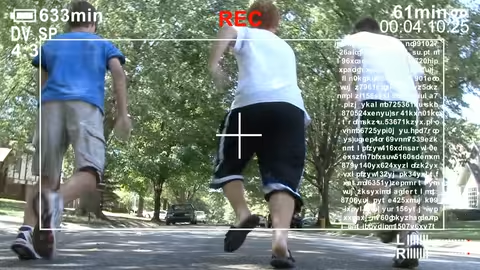
My most ambitious VFX project. A camera struck by lightning "comes alive", transforms into a Transformers-style robot, and chases a group of friends. They eventually defeat it by overexposing it — they shine all their lights directly at it and it overheats.
Over 250 hours went into the post-production. I modeled the camera robot from scratch in 3D, animated the transformation, tracked it to live footage, integrated lighting, added smoke.
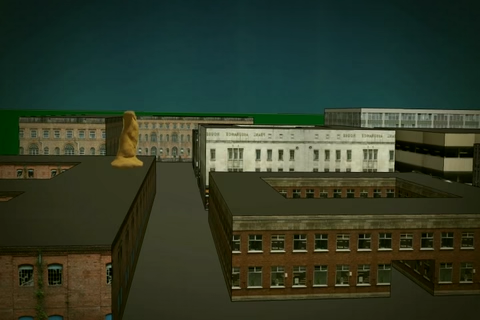
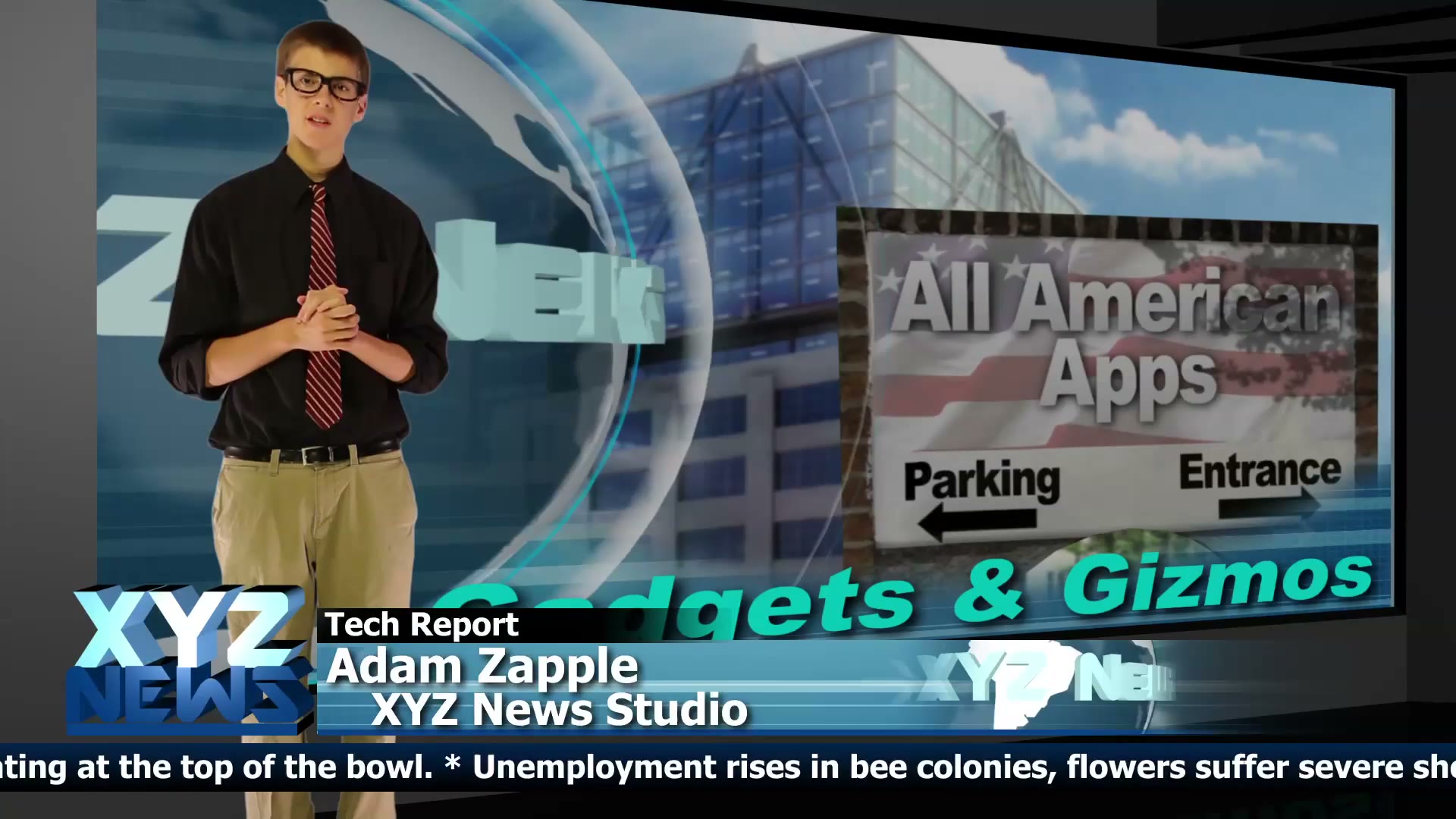
The XYZ News bit, again — three years on. By 2011 our skills were "professional" enough that I think we could've published this against The Onion at the time. A 3D virtual newsroom set with actual jib-style camera moves. Proper greenscreen lighting. The whole thing centered around one fake story: a new iPhone app for the U.S. president that gives him unlimited power.
This is, embarrassingly, still one of the funnier things I've ever made.
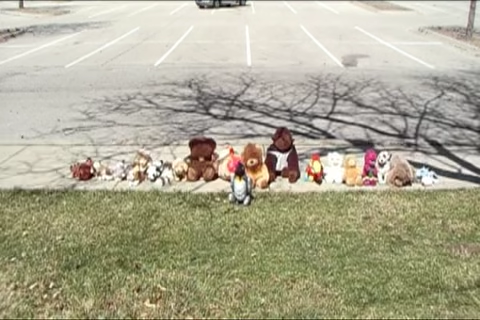
Almost no dialogue. A guy holds a yard sale and tries to get rid of his stuffed animals. The stuffed animals come to life. They are not pleased. He flees. They chase. The film ends with an inflatable penguin pecking him on the face and a cut to black.
Some shots used stop-motion. Some used hidden puppeting. I tried to mix them in a way you couldn't tell. In the climax, twenty-plus animals all stop-motion together. The shot took so long that a nearby tree's shadow moves across the screen faster than the animals do. I still laugh at that.
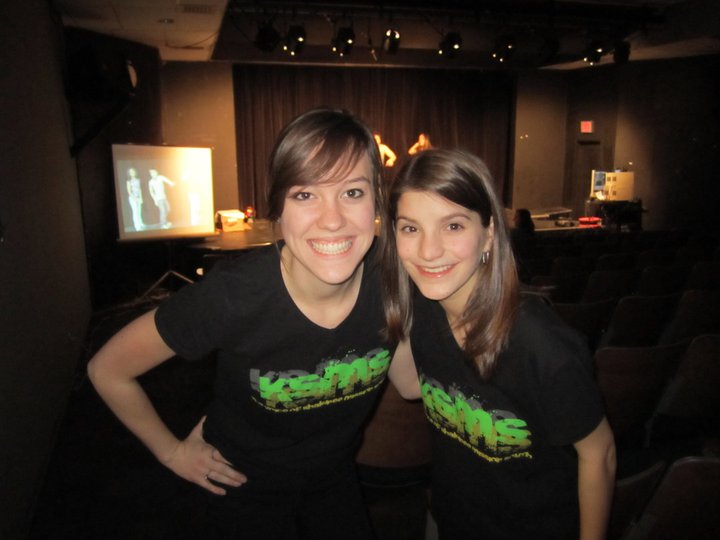
KSMS was my high school's broadcast journalism program. We made the morning announcement show, news packages, sports features, comedy sketches — everything. Our teacher Mr. Hirons was supportive of every crazy idea we had, and we had a lot of them.
I built two versions: an animated, interactive Flash version that won "Best Interactive Site" at a local competition, then a WordPress version once Flash started its slow death so future students could keep updating it.
A Flash game where you play as Mr. Hirons defending the building from astronauts by shooting tennis balls. With actual scoring this time. The furthest I'd gotten on a complete game.
Google Street View, but for our school. I walked around with a camera, shot 360-stitched panoramas at every hallway junction, then built a minimap-based viewer so you could click a dot to "stand" at that point. QuickTime did the actual panorama rendering.
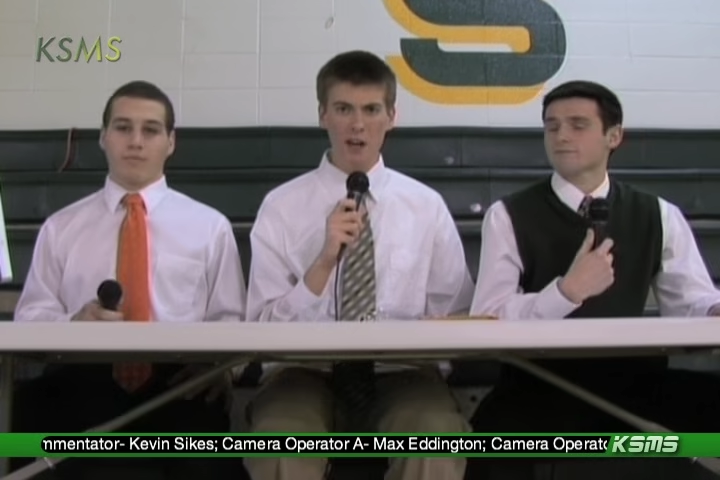
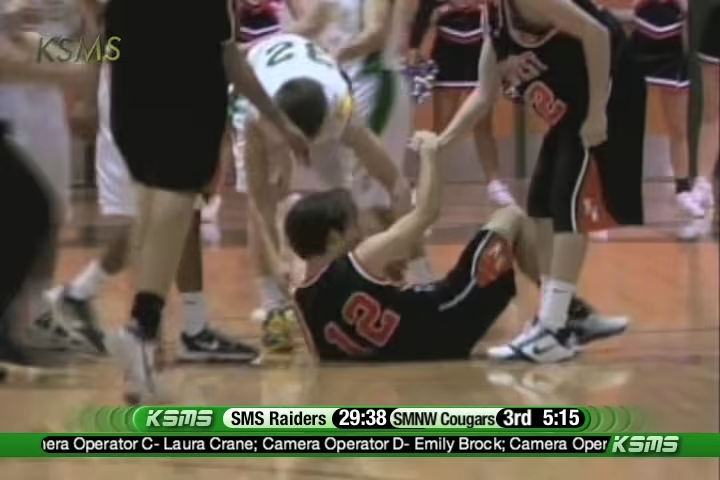
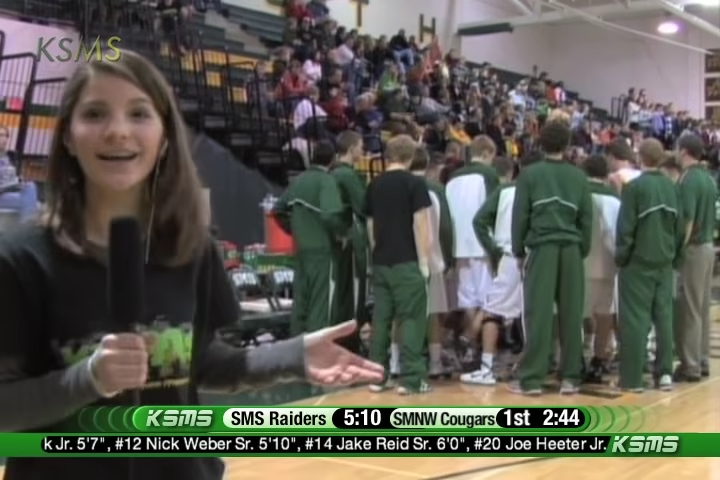
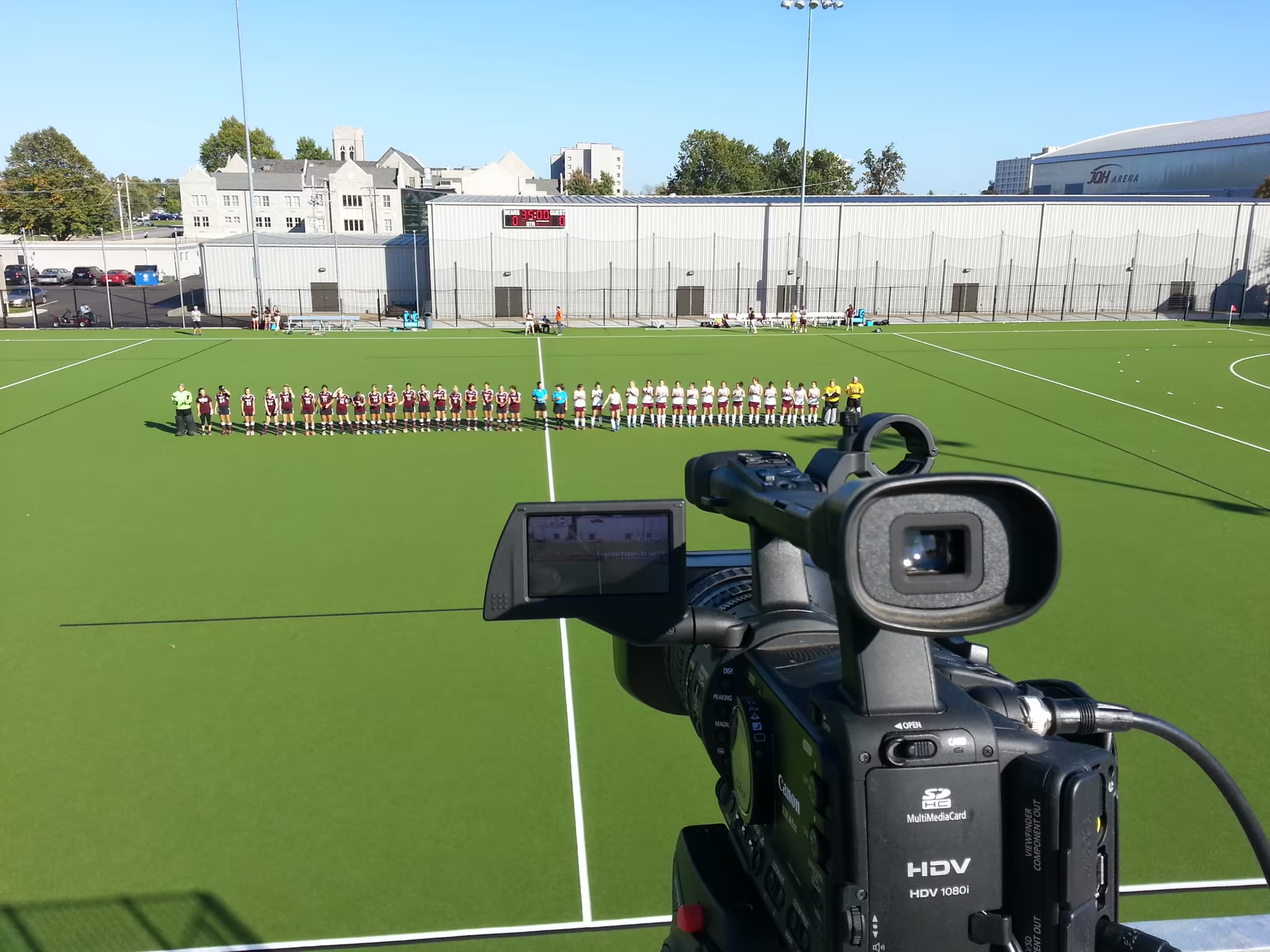
Probably my favorite KSMS memory. We brought live broadcasts to our sports events — before YouTube had livestreams. I wired a row of cameras into an analog video switcher, ran that into an analog-to-digital converter, and pushed the output through some random live streaming service.
The tape decks were our "instant replay" rig. Each camera also fed a tape deck that recorded its input to a DV tape. When something happened we wanted to replay, we'd rewind, hit play on the deck, and switch the live broadcast to that input. Sometimes it worked. When it worked, it felt like magic.
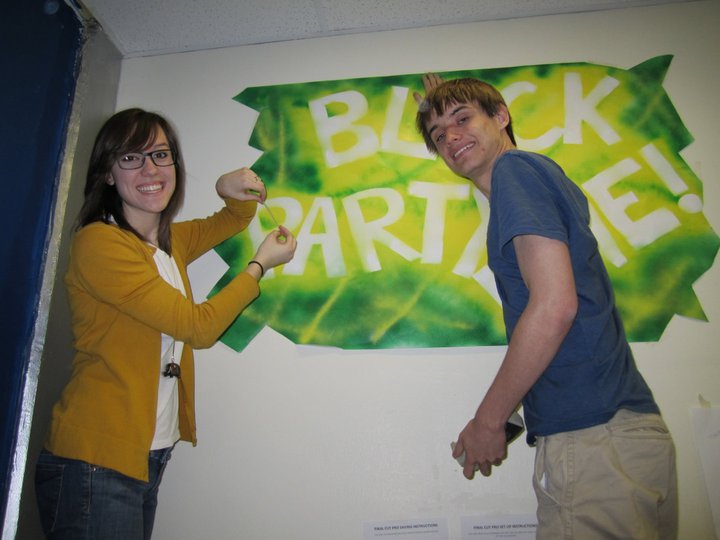
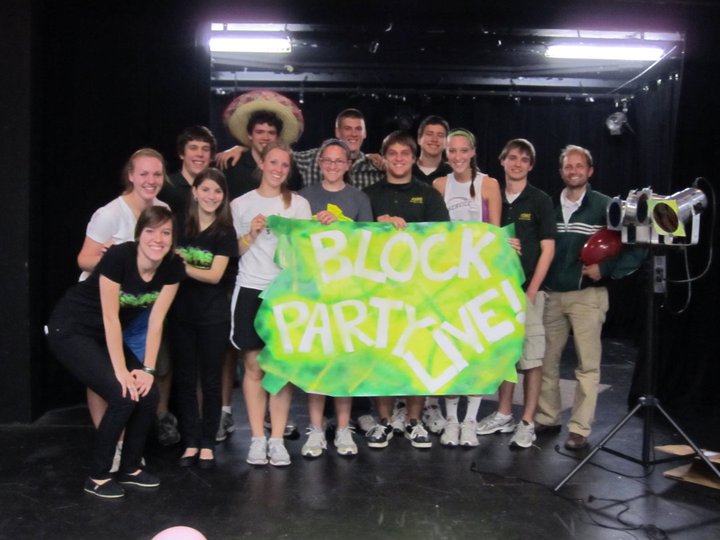
A live, SNL-style variety show in our school auditorium. Months of preparation. A full live audience. Multi-camera coverage. Pre-recorded sketches. Stand-up. Improv. A live band. A custom motion-graphics package. Everything KSMS had taught us, in one night.
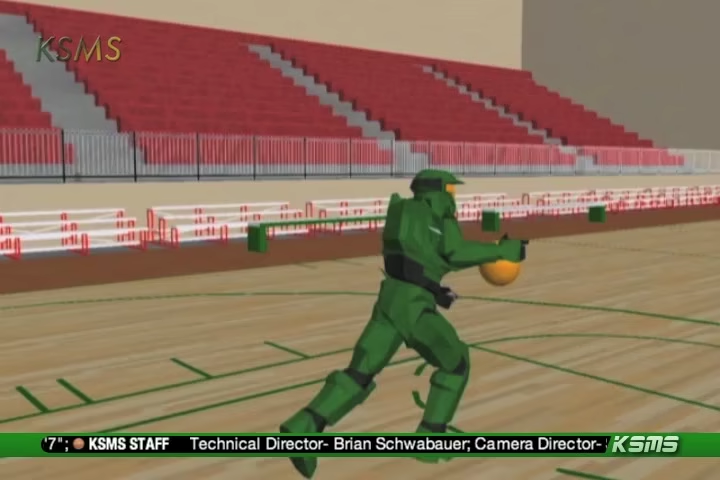
To promote Block Party I made a trick-shot commercial: a member of KSMS hits a basketball from an absurd distance. (Yes, the make is a VFX trick.) It got people talking.
A parody short film for KSMS about life in the midwest. Just a fun one with Kevin and a handful of KSMS regulars.
Kevin and I were headed to different colleges, so we made one last film together that summer. A fish-out-of-water comedy about a guy meeting his foreign-raised long-lost brother. Lighter on effects, heavier on story. Our best storytelling at that point.
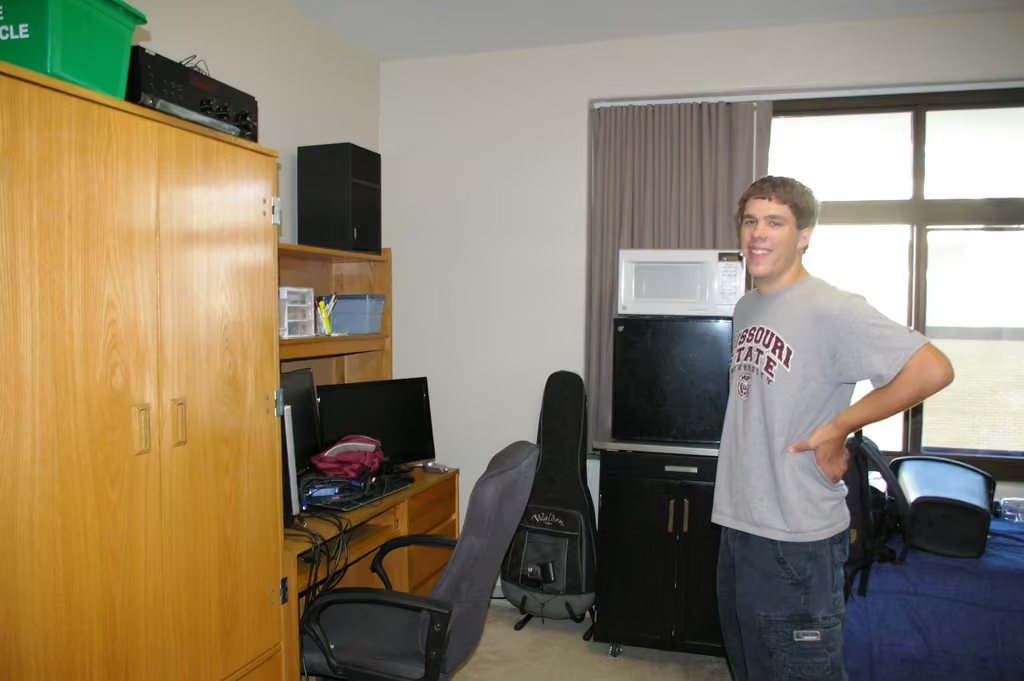
High school was wrapping up. Kevin was going to Baylor. I was going to Missouri State. We knew we'd see each other again — eventually — but Hunky Spunky Productions, the version with our childhood in it, was done.
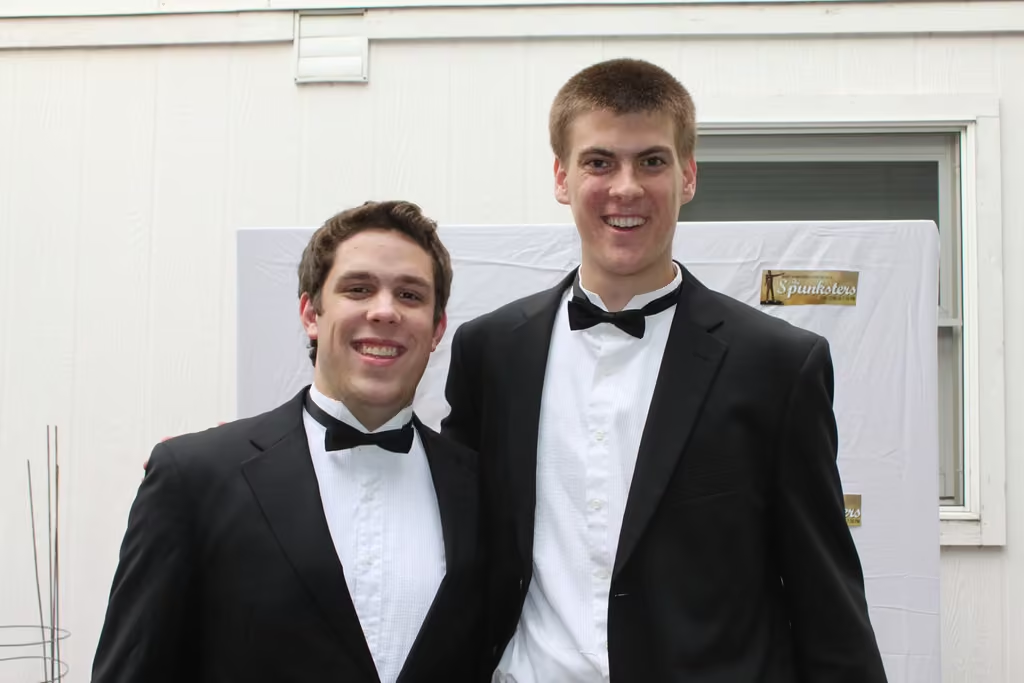
So we sent it off the only way we knew how: The Spunksters — an awards show, modeled after the Oscars, for ourselves. Awards in every category. Speeches. Live-streamed. Projected on the side of a house. Forty friends in a backyard, watching a live video feed of Kevin hosting from inside, so the host appeared on a twenty-foot tall projection like a giant.
I wanted viewers to be able to text in their reactions and have them appear on the projected wall. Google Voice didn't (and doesn't) expose an API. But it can forward incoming texts to email. So: text → Google Voice → email → my little polling script → OBS overlay. Untested until the moment it had to work. It worked.
I deeply believe in this: live life all the way through, even the parts that don't matter. Backyard awards shows are nothing. It is so much more fun to take them seriously than to phone them in.
For the show, Kevin and I wrote a song called "Bubbly Bros". A rap song about two guys who love blowing bubbles. It sounds like a constant innuendo. It is not. We're really just rapping about bubbles.
We ran out of time to shoot a real music video, so we did a photo shoot, set it to the song, and called it done. It got cheers from a backyard. It belongs there.
For The Spunksters we also cut a fake trailer for a "Power Rangers III". An adult Kevin — the blue ranger from our childhood movies — has not let his glory days go. The other rangers have grown up. They have kids. They have jobs. Kevin doesn't. The trailer ends with a gag where the words "in 3D" break the letterbox bars. It still kills me.
I majored in Electronic Arts — a multidisciplinary major covering video production, audio production, animation, and interactive design — with a minor in Computer Science. Pretty much the perfect match for a kid who'd been combining all of those things in his basement since he was eleven.
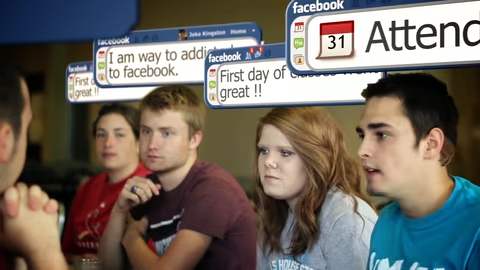
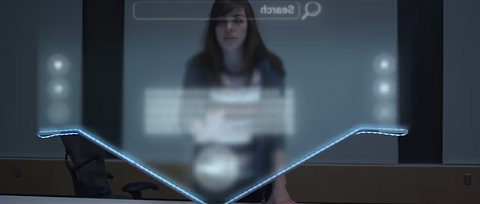
A short film I made to try a face-tracked graphics technique: what if Facebook was real life? A character starts college; everyone around him has a floating Facebook status above their head; people speak in social-media tone, "like" each other's comments out loud, etc.
The shoot was an excuse to learn face tracking and HUD compositing. The script was an excuse for the shoot.
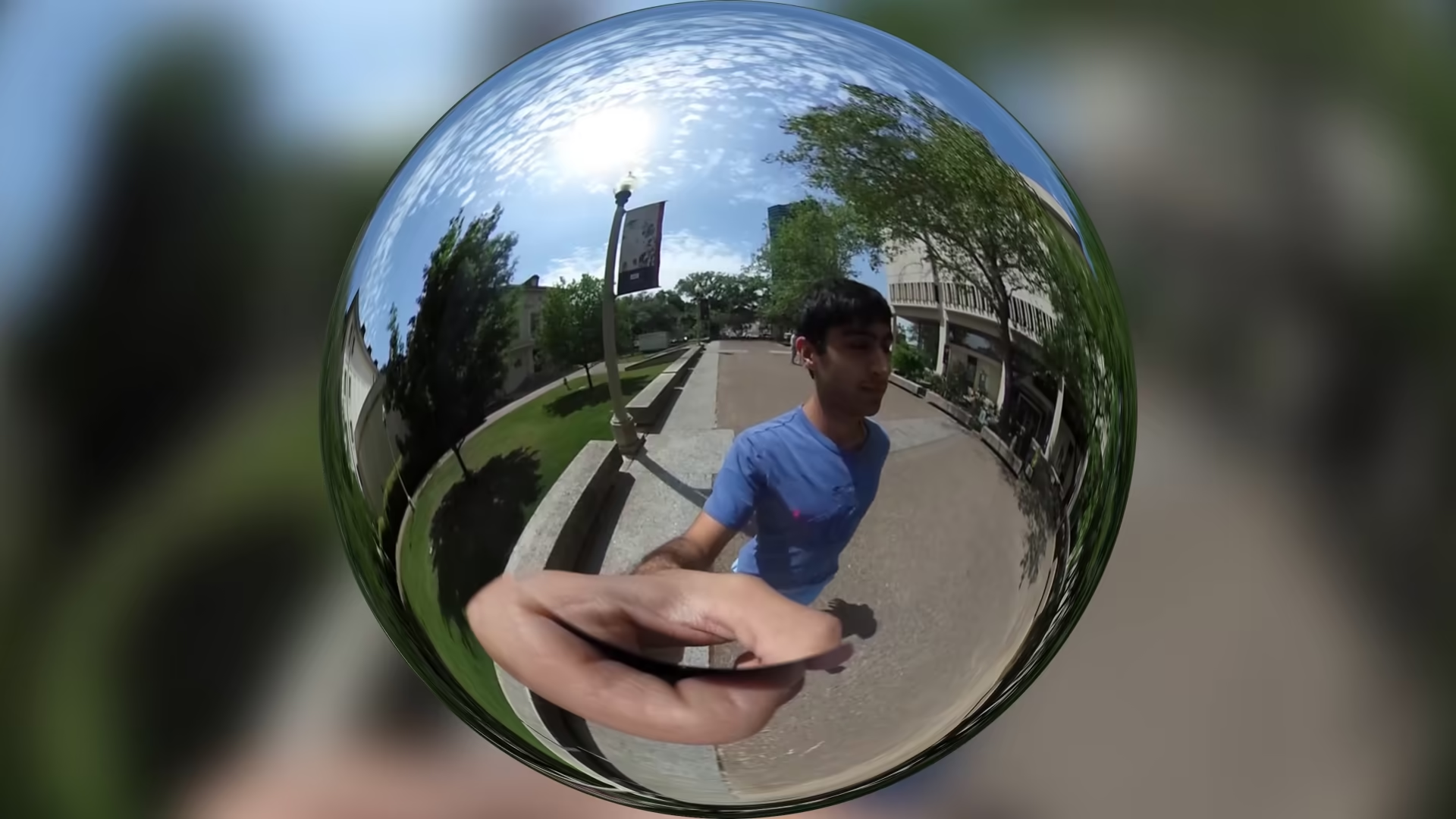
"Make something cool and impressive," our ART 300 professor said. So my group made a 360-degree panoramic short film. In 2014. When you couldn't buy a 360 camera, when YouTube didn't support 360 video, when "360 rig" wasn't a thing you could rent.
Another group project in the same class. Idea: a group of friends downloads the app and gets a prompt ("take a sad selfie", "take a picture of something funny"). Everyone uploads their photo to a shared S3 bucket. The app stitches all the photos into a single hollywood-style movie trailer with intense music and explosions — your friends as the cast. We shipped a working prototype.
A Flash bus-driving game where you pick up MSU campus bus passengers, collect coins, and dodge other cars. There are levels for each real MSU campus route, three drivers with different stats, and a real scoring + achievements system. A teammate hand-drew all the art. I did the programming, animation, and most of the motion graphics.
Flash couldn't really do 3D in 2013, so I faked depth with scaled 2D sprites and crossfade swaps of the bus model from different angles. Clunky, but believable.
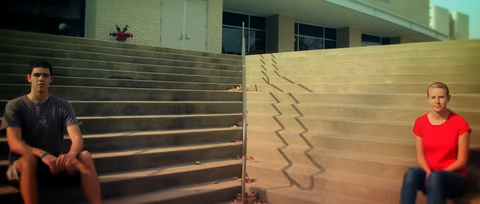
48-hour film festival. I wanted to do something nobody had done before. So I made a film with two oner-shot perspectives, shown side-by-side at the same time, in real time. One: the protagonist leaves her house. Two: a man hidden outside breaks in while she's gone. She comes back. He gets stuck. They turn out to know each other. It ends.
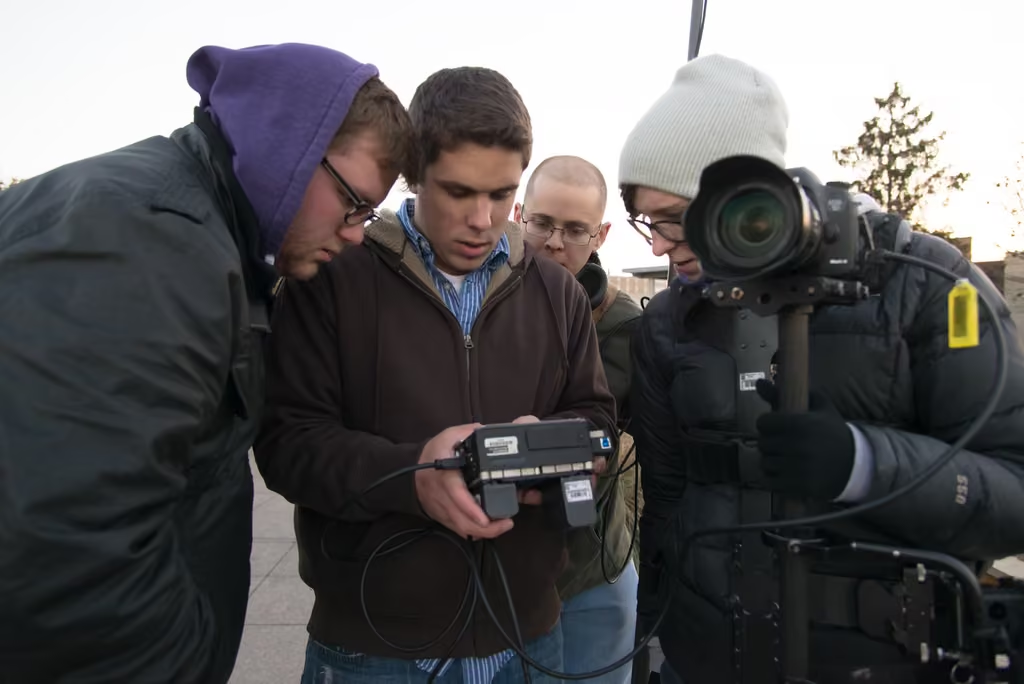
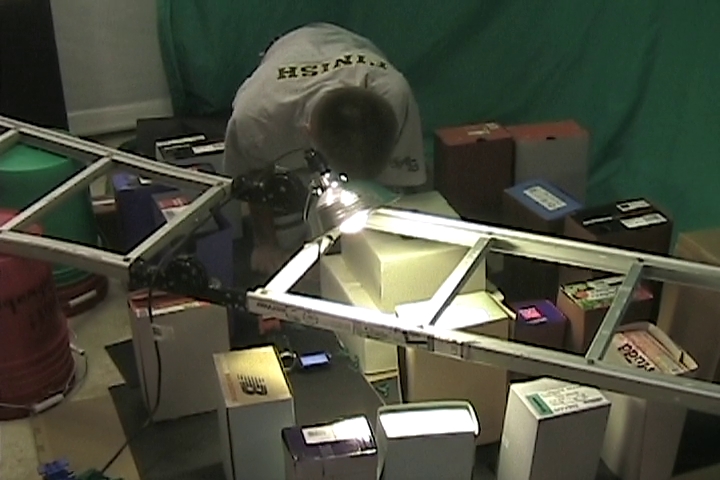
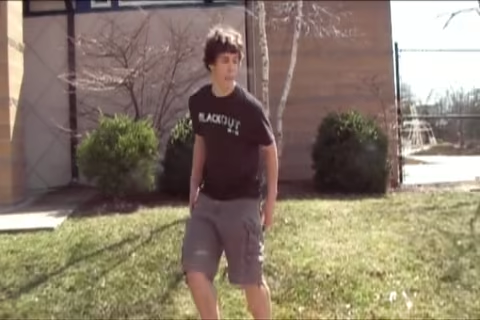
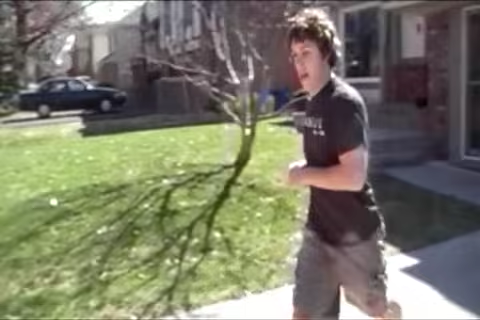
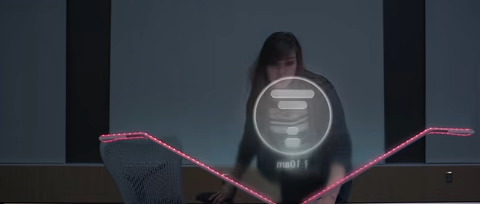
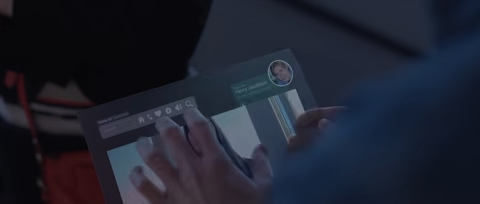
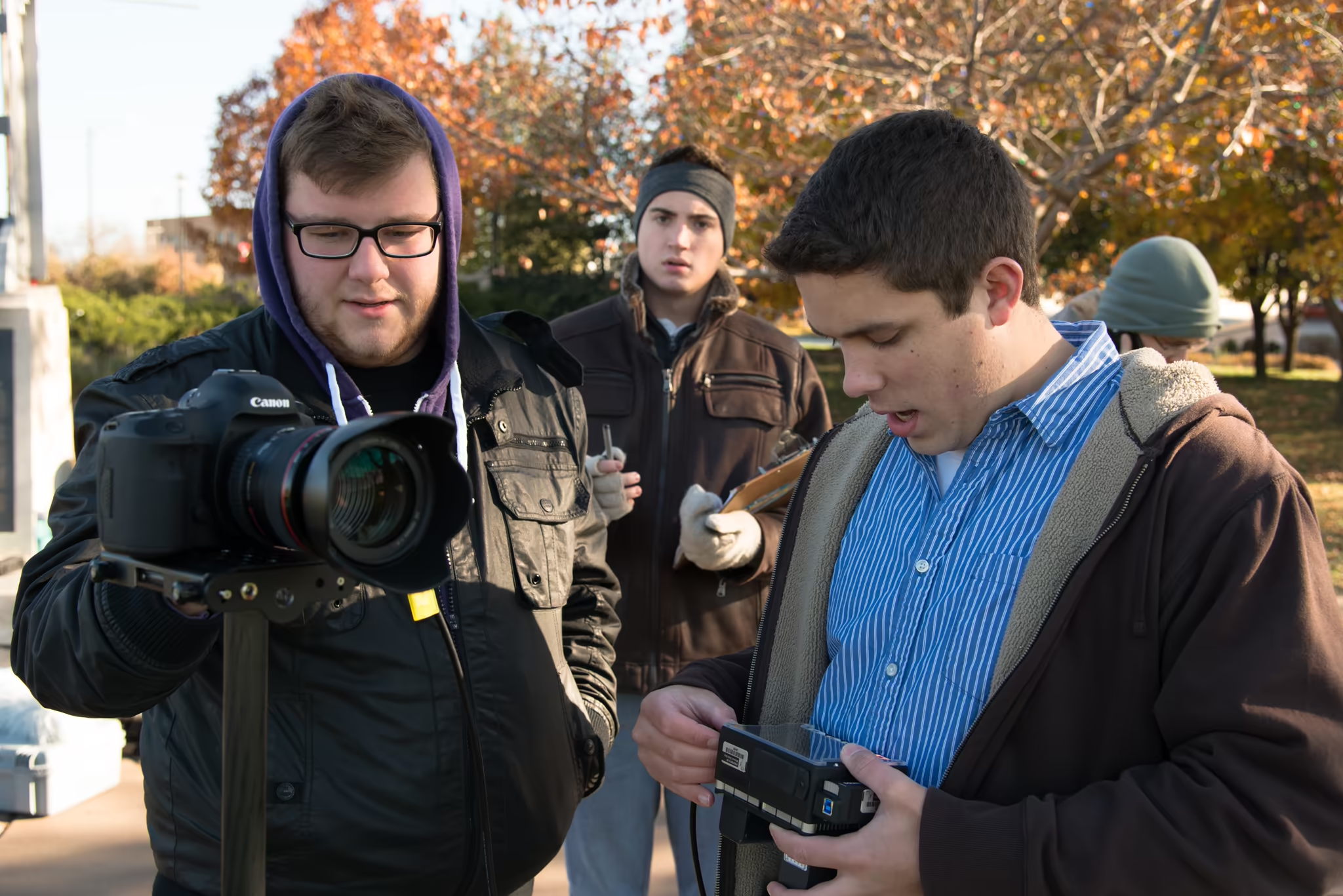
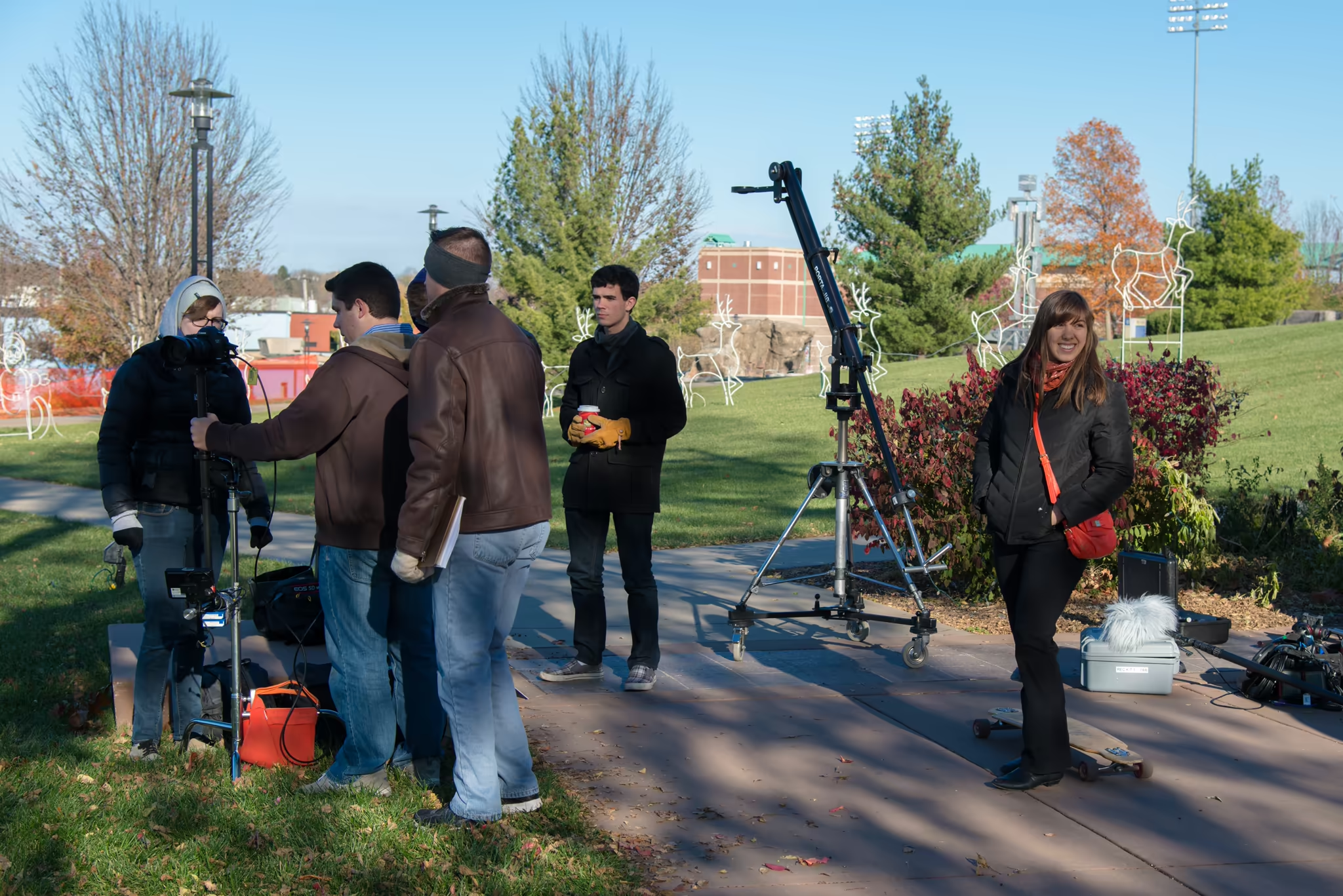
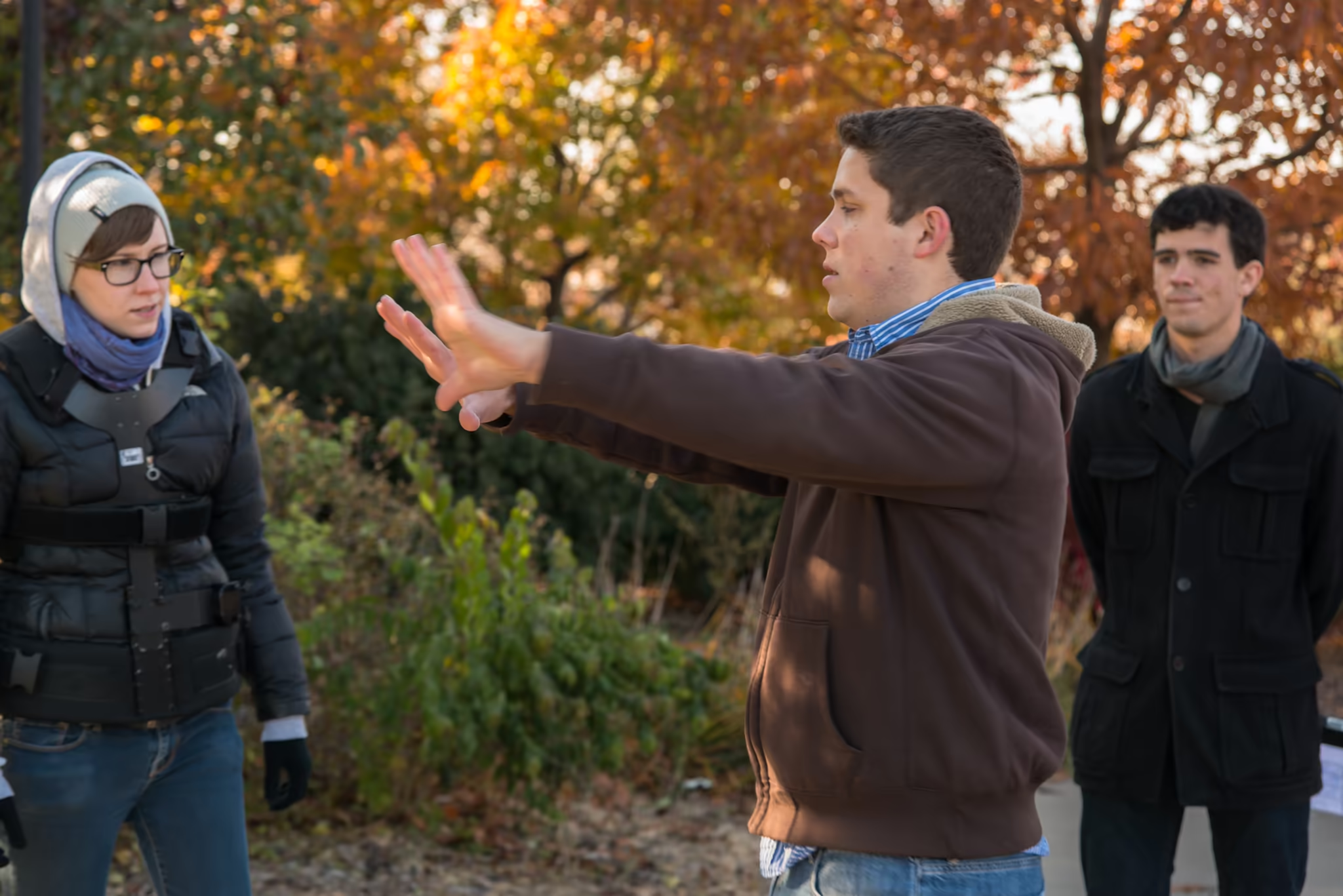
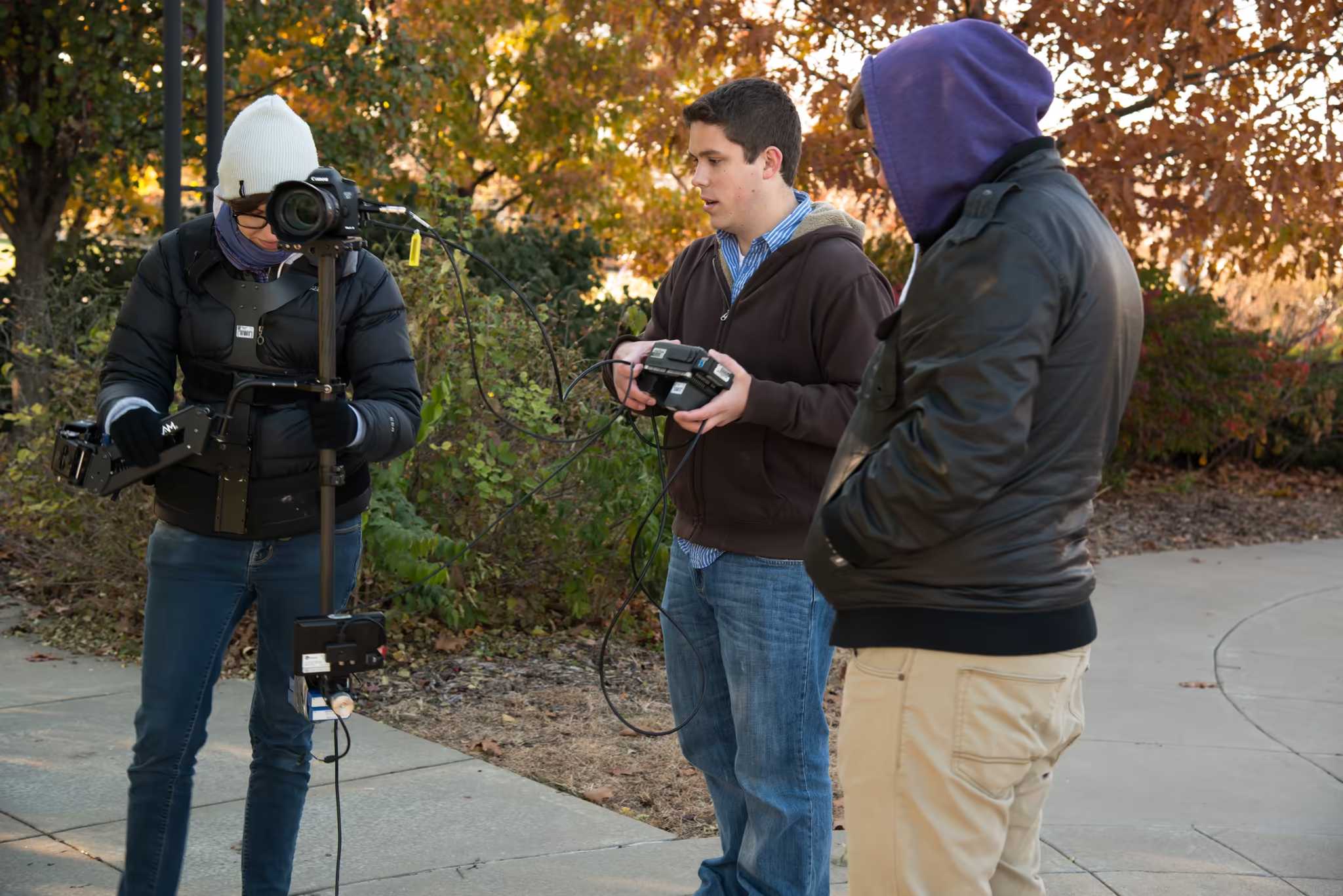
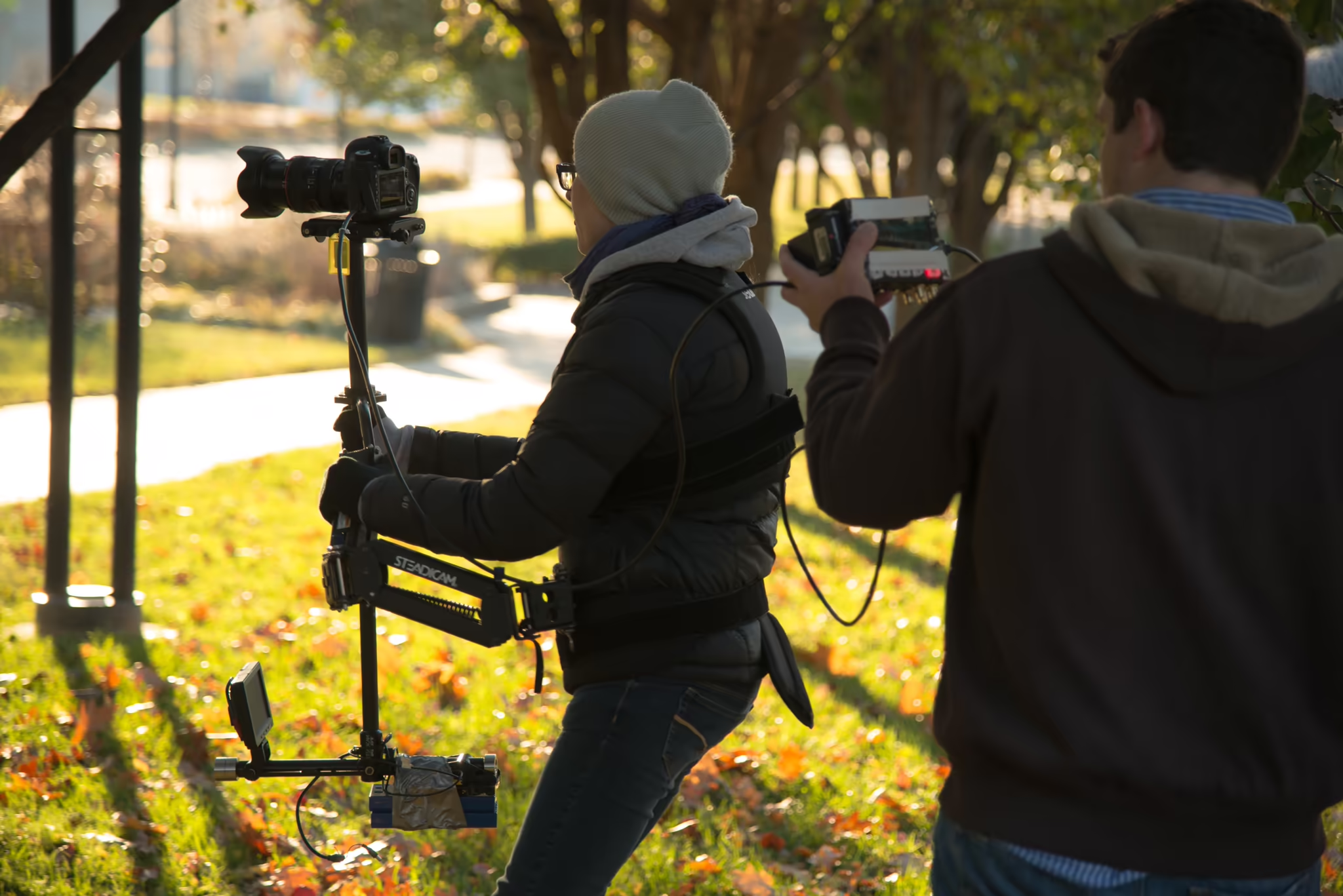
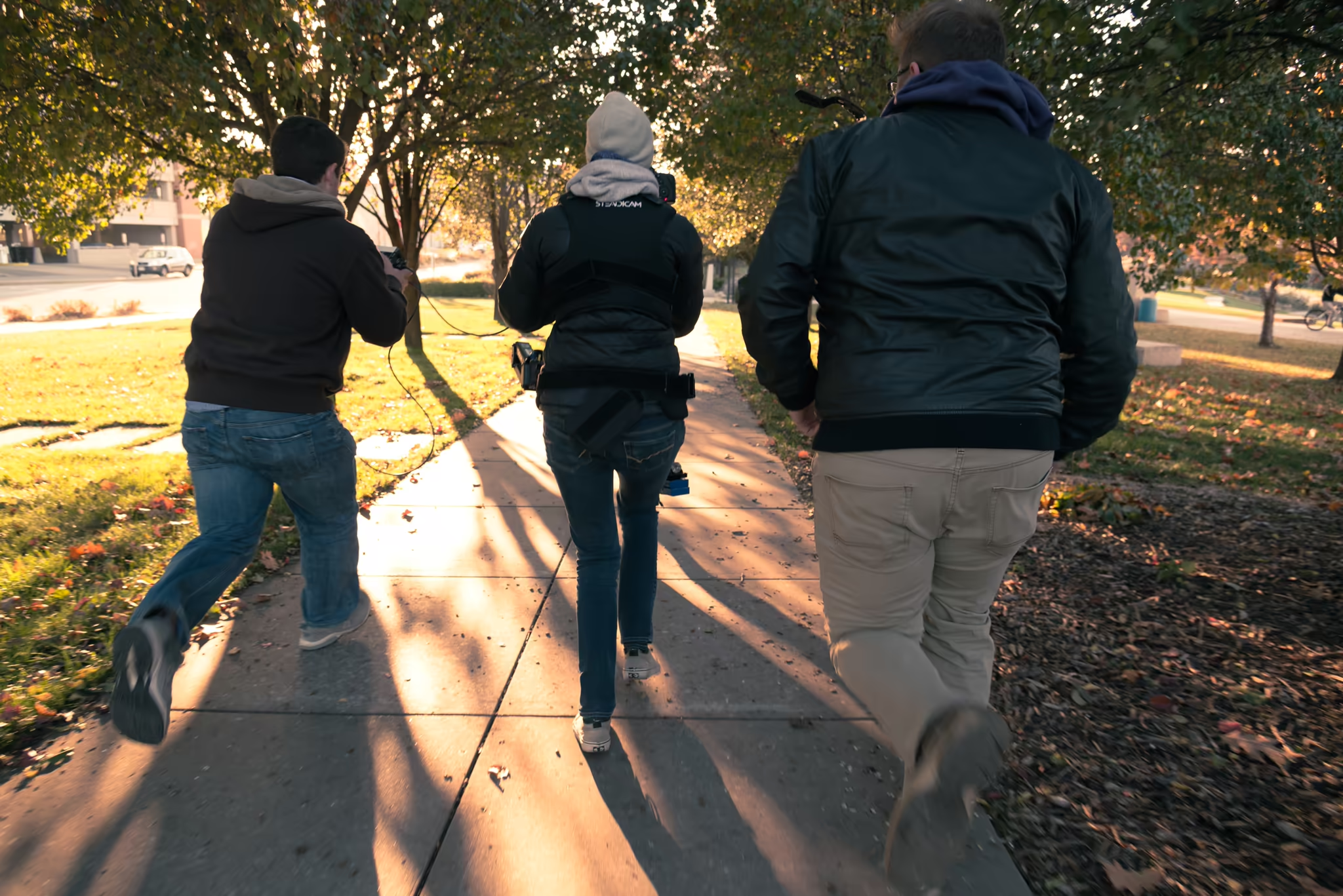
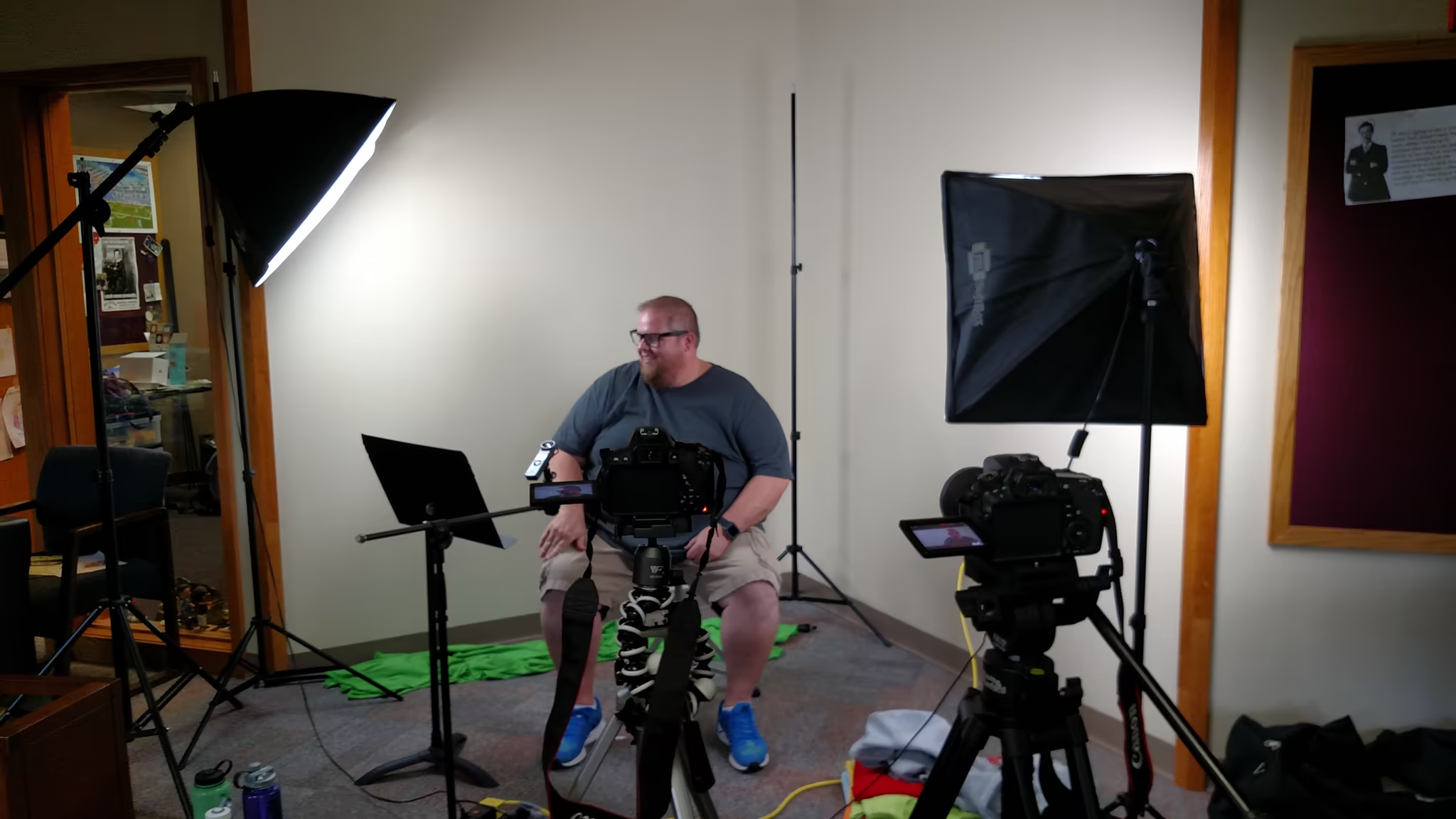
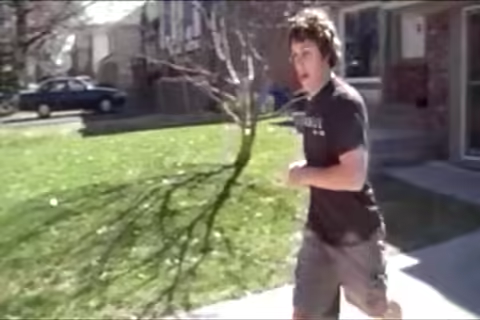
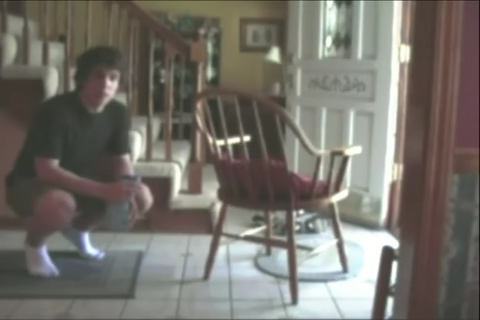
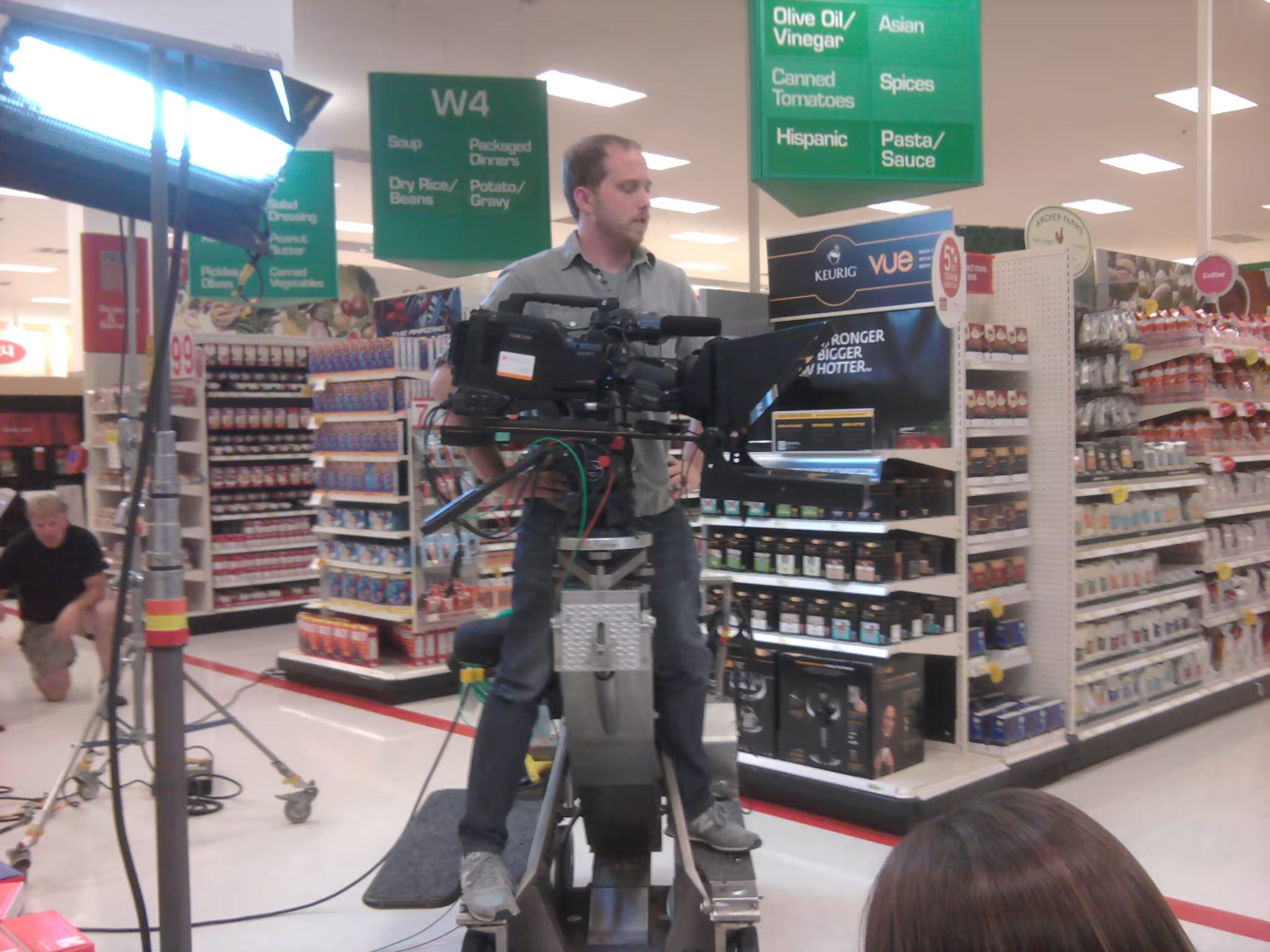
Directing-class group film. I script-supervised, edited, and did the VFX. The character realizes she's inside a film and tries to escape it; boom mic crashes the frame on purpose.
Cinematography-class short. Two guys try to one-up each other to land the same job. Real lighting setups, real coverage.
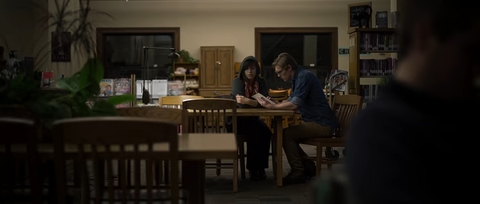
Senior-thesis warmup, shot in Canon RAW on a 5D mkIV with Magic Lantern firmware. The girl on the bench was on the phone the whole time.
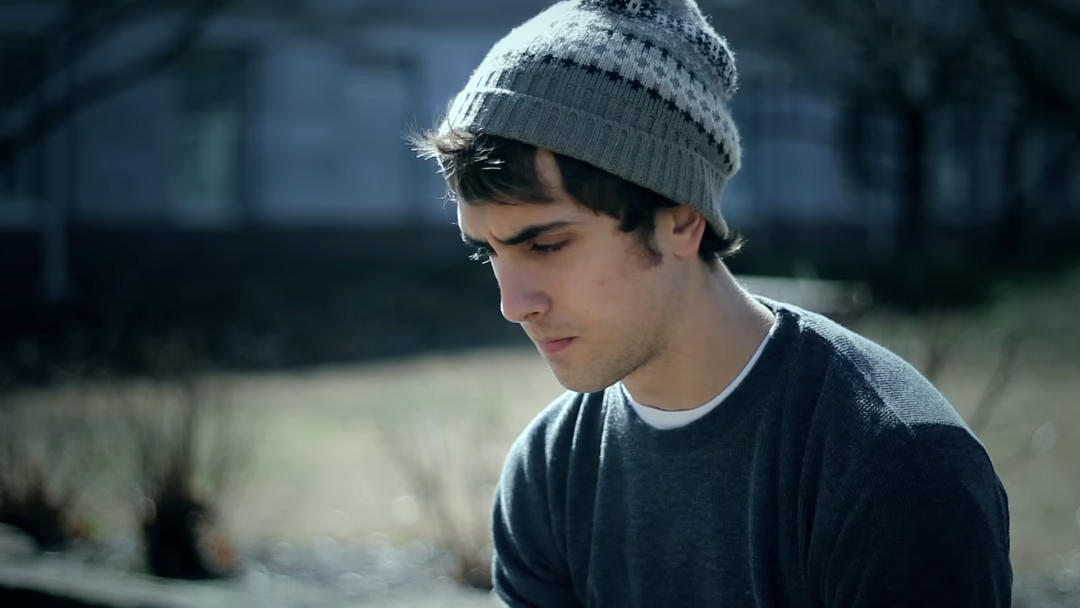
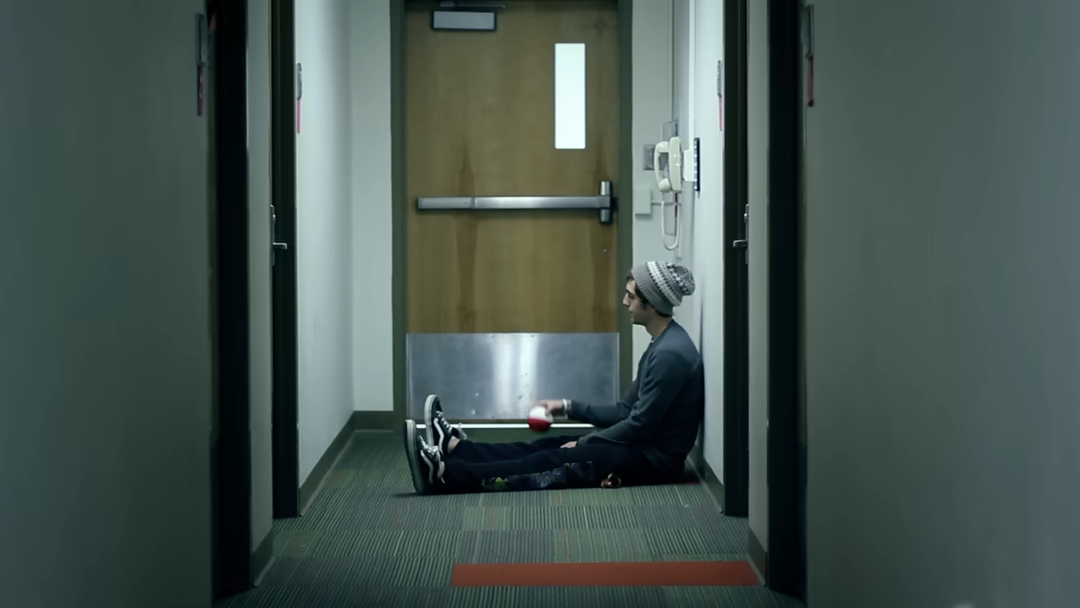
A quiet 2-character short for my directing class. A husband obsessed with his career, a wife who wants him home. Conversation as conflict.
Kevin came to Missouri State for grad school my senior year (he finished Baylor a year early). We moved into a house and started writing music again. The result was a band called Bassless Ideas — two short EPs, a few ridiculous songs, a few serious ones. Still online, still occasionally listened to.
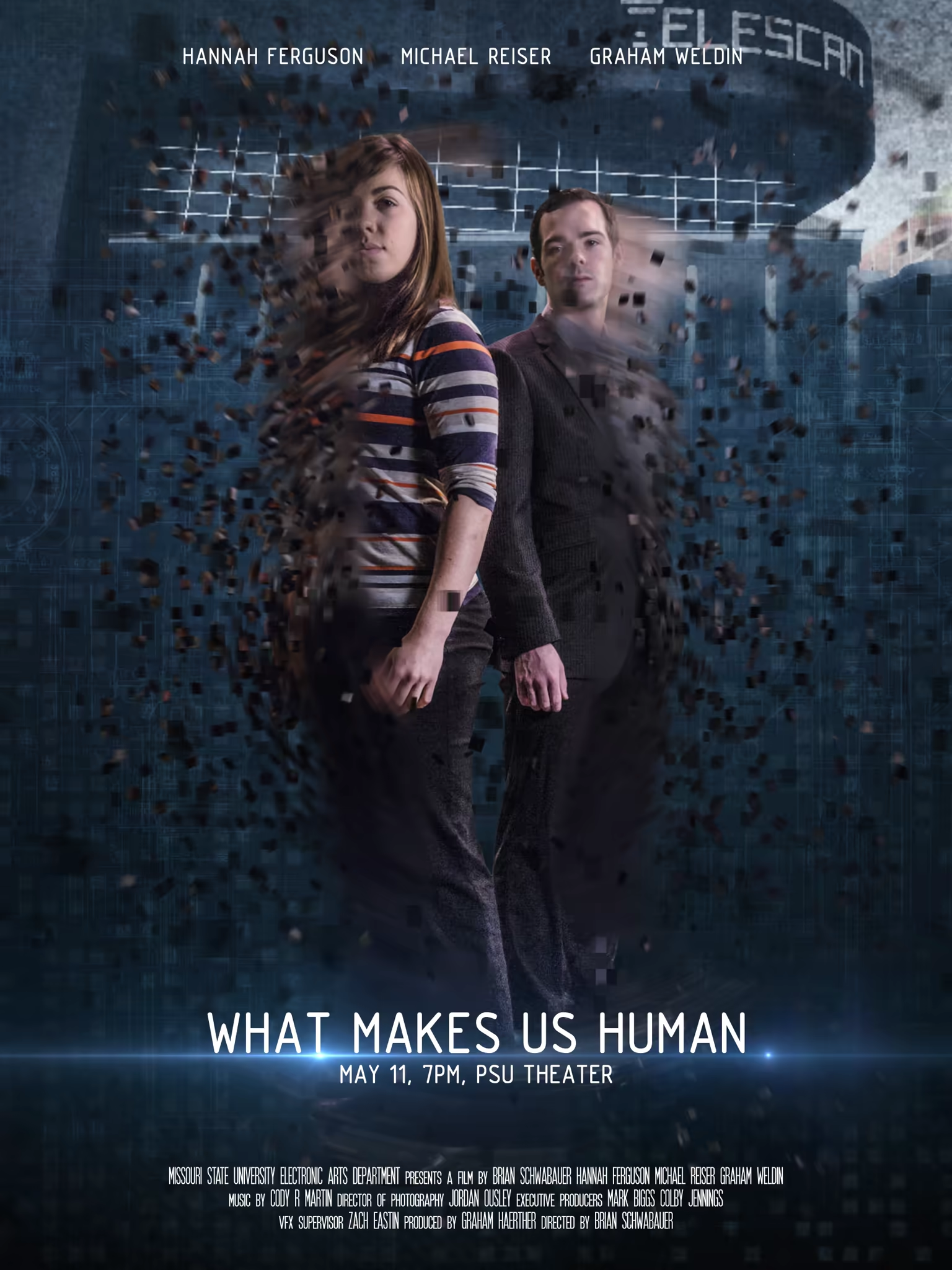
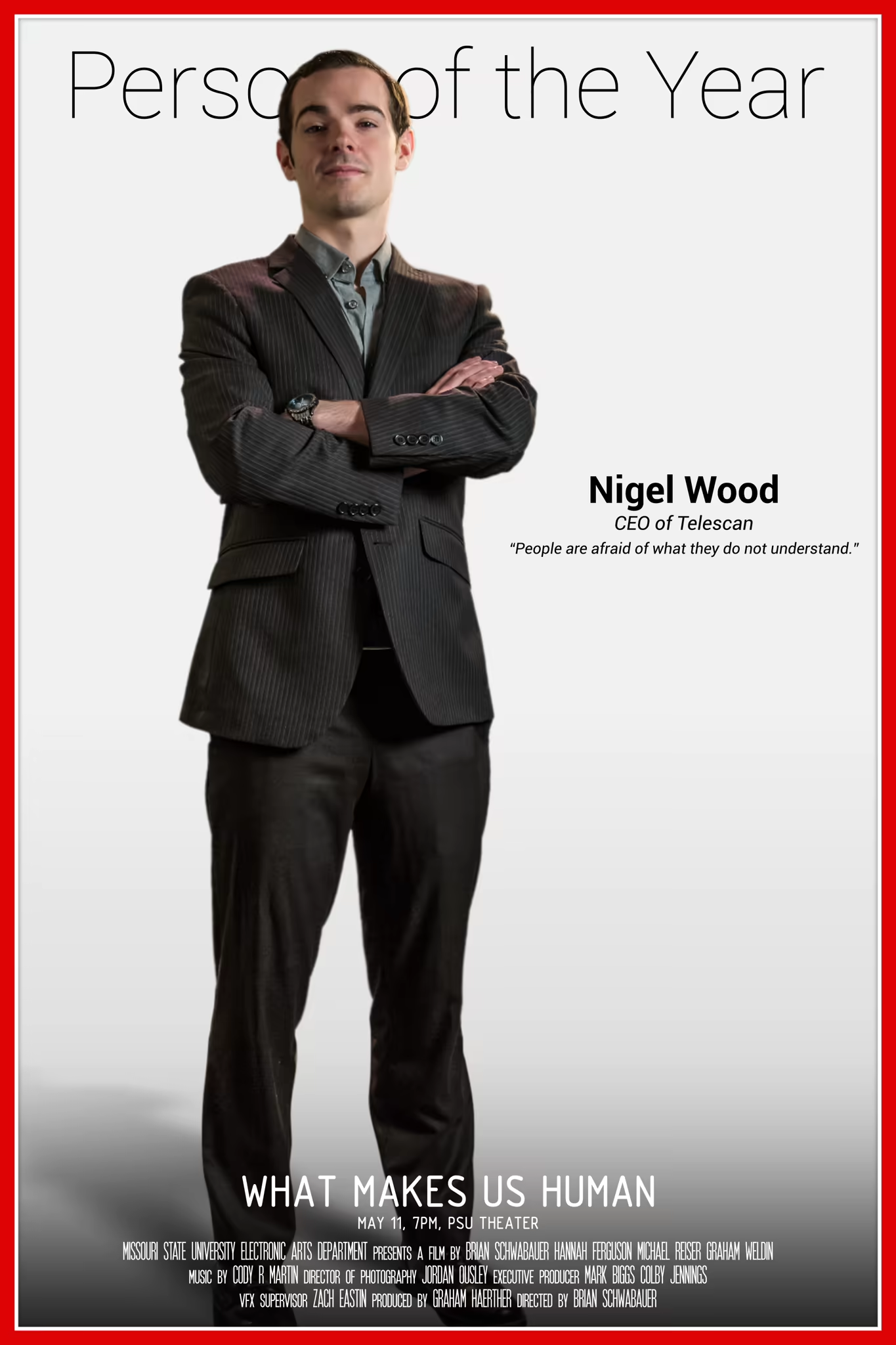
Eve, a journalist, is digging into a new teleportation technology when she's forced to use a teleporter in an emergency. The machine works by scanning your body at the molecular level, transmitting the data, and "printing" you on the other end — then destroying the original. The public doesn't know that last part.
The power flickers mid-scan. The machine prints a new Eve but fails to destroy the old one. Now there are two of her, and the company has reasons to make sure nobody finds out. She eventually exposes the secret to the world.
The question the film never quite answers: if a perfect 1:1 copy of you exists, is the original still "you"? What does this technology do to the meaning of being a person? We didn't try to solve that on screen. We tried to let it sit in your stomach.
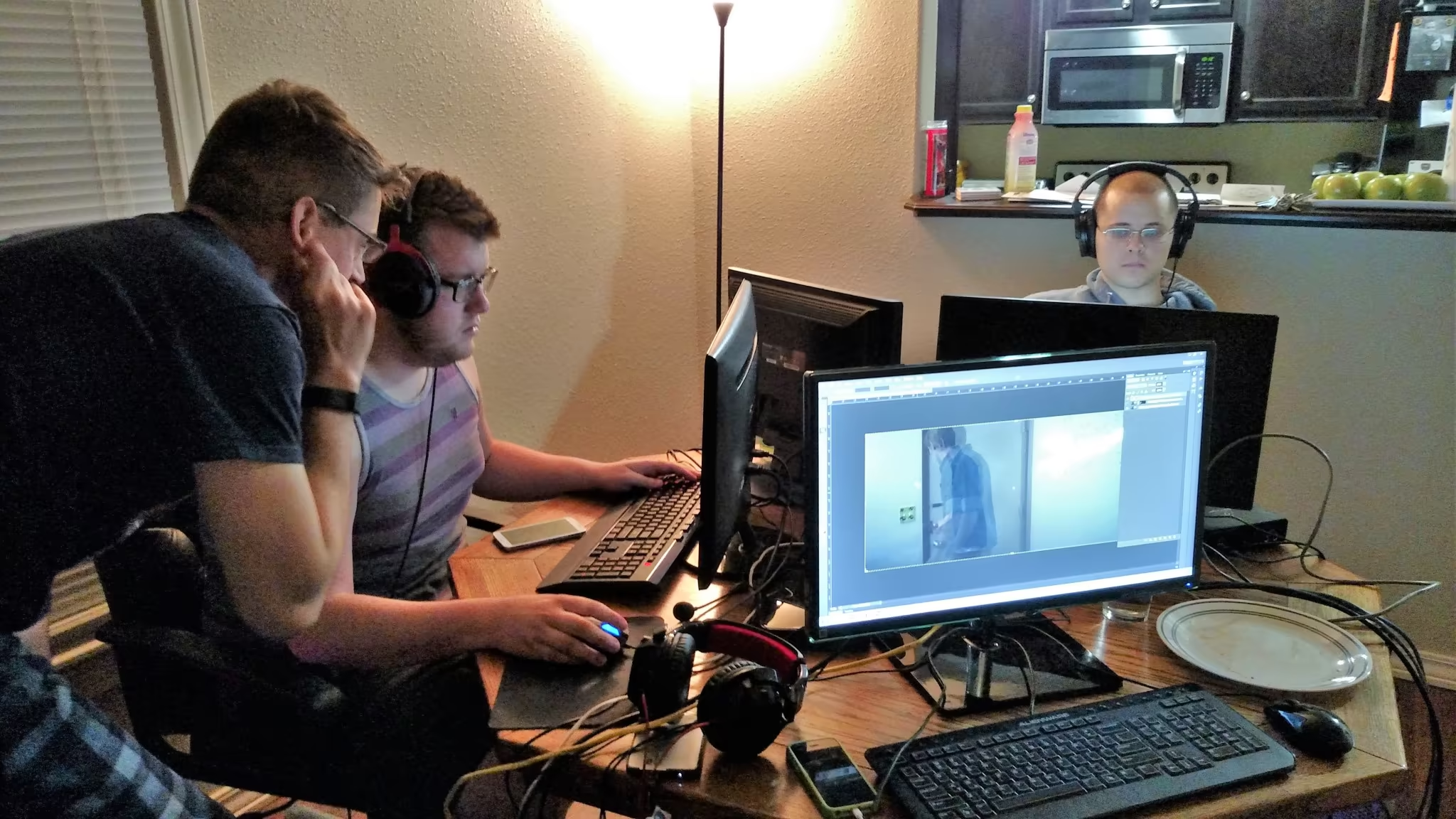
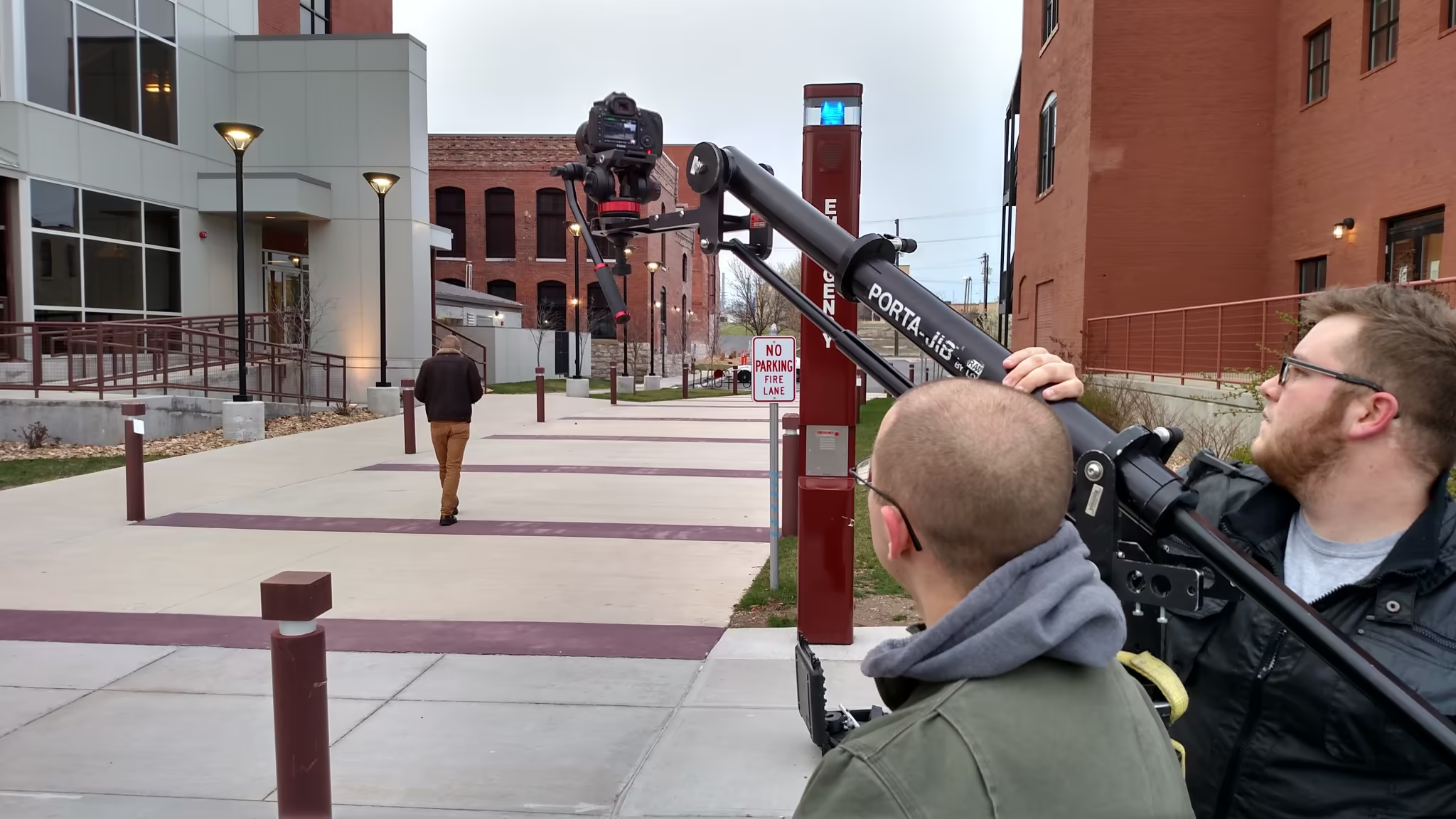
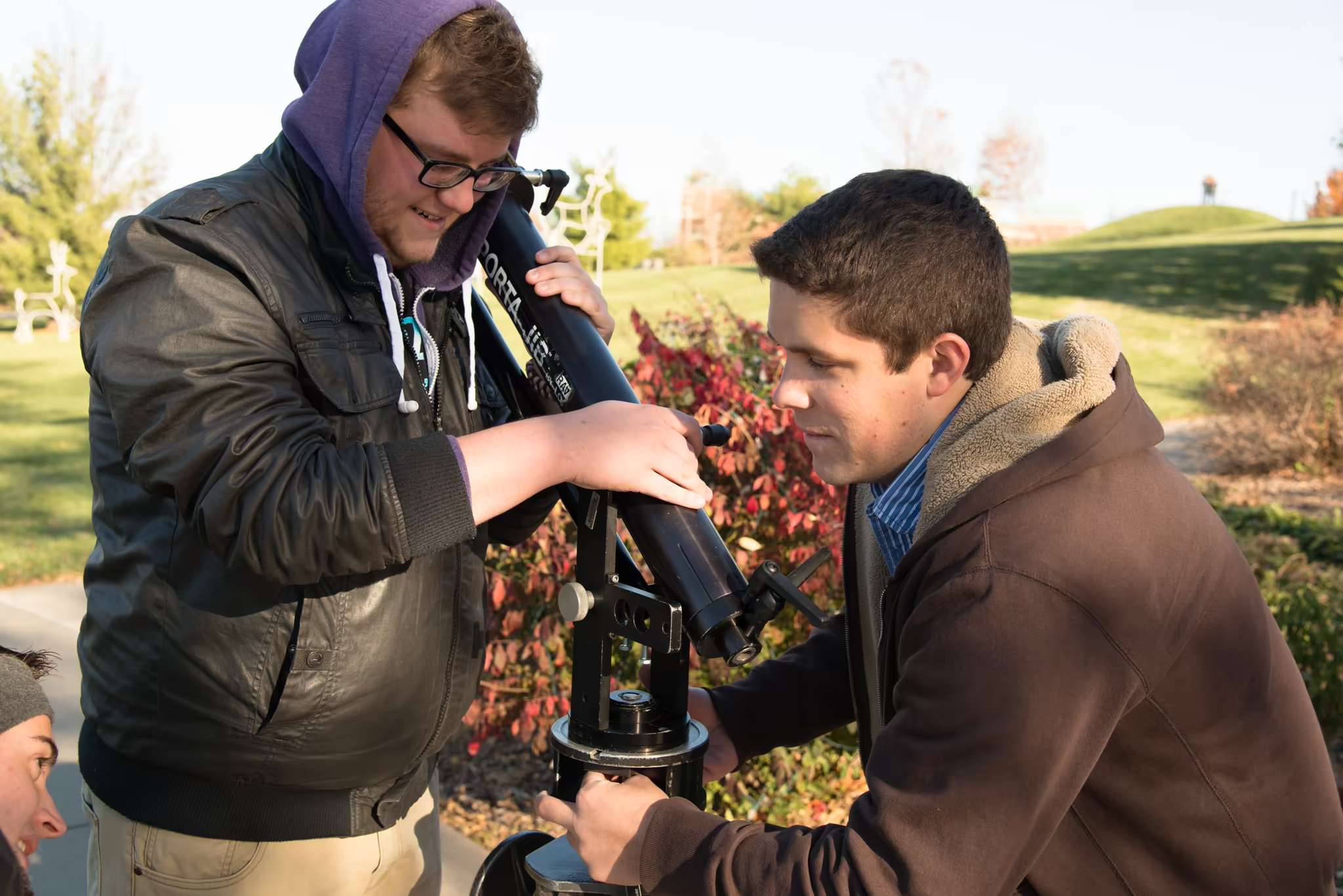
A 15-minute short, but with craft services, extras, multiple locations, a casting call, an Indiegogo fundraising campaign, real camera rigs, multiple revisions on the script over months of preproduction. Not because we needed all of that to deliver — but because we wanted to know what it felt like to actually do it.
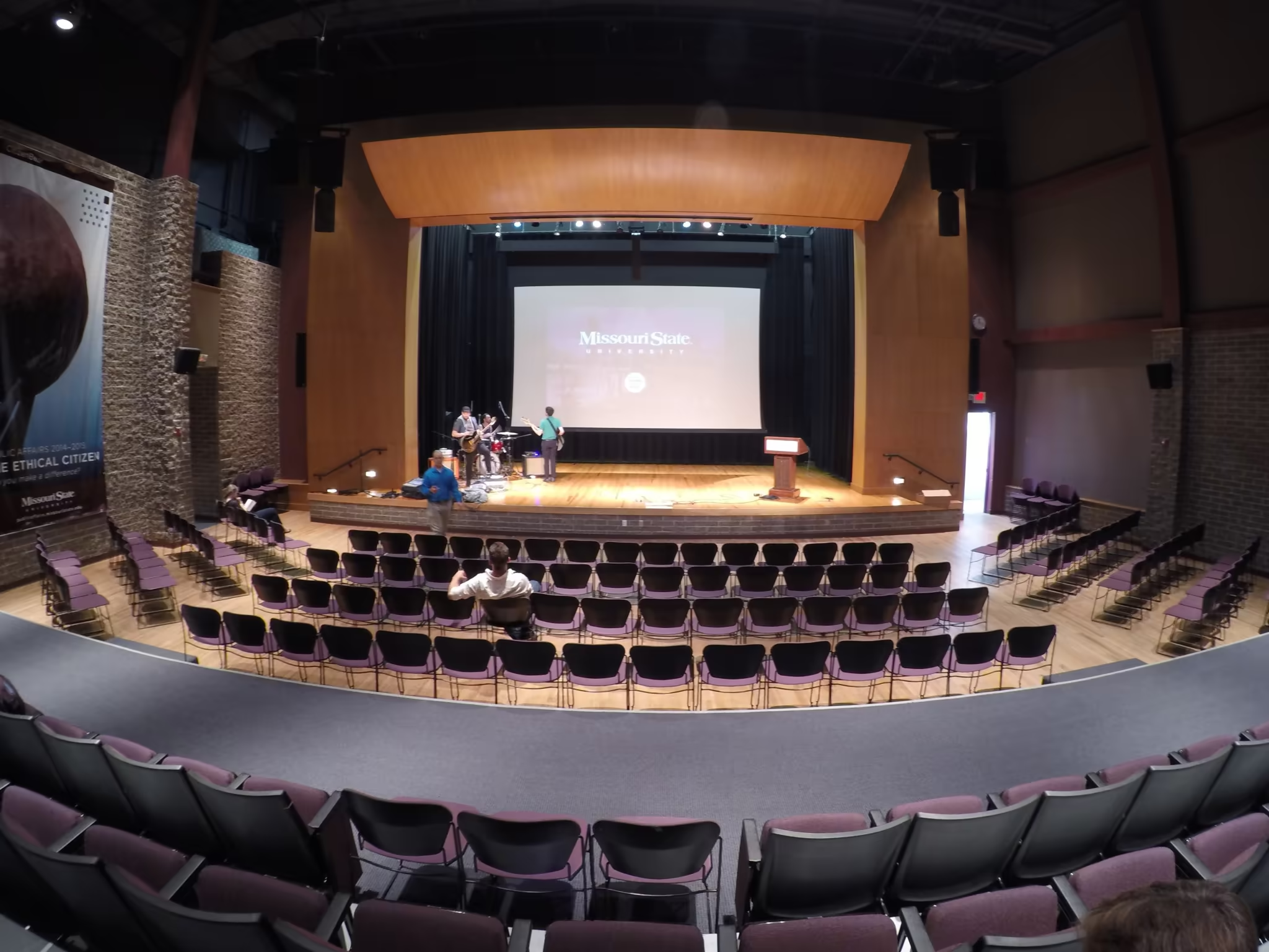
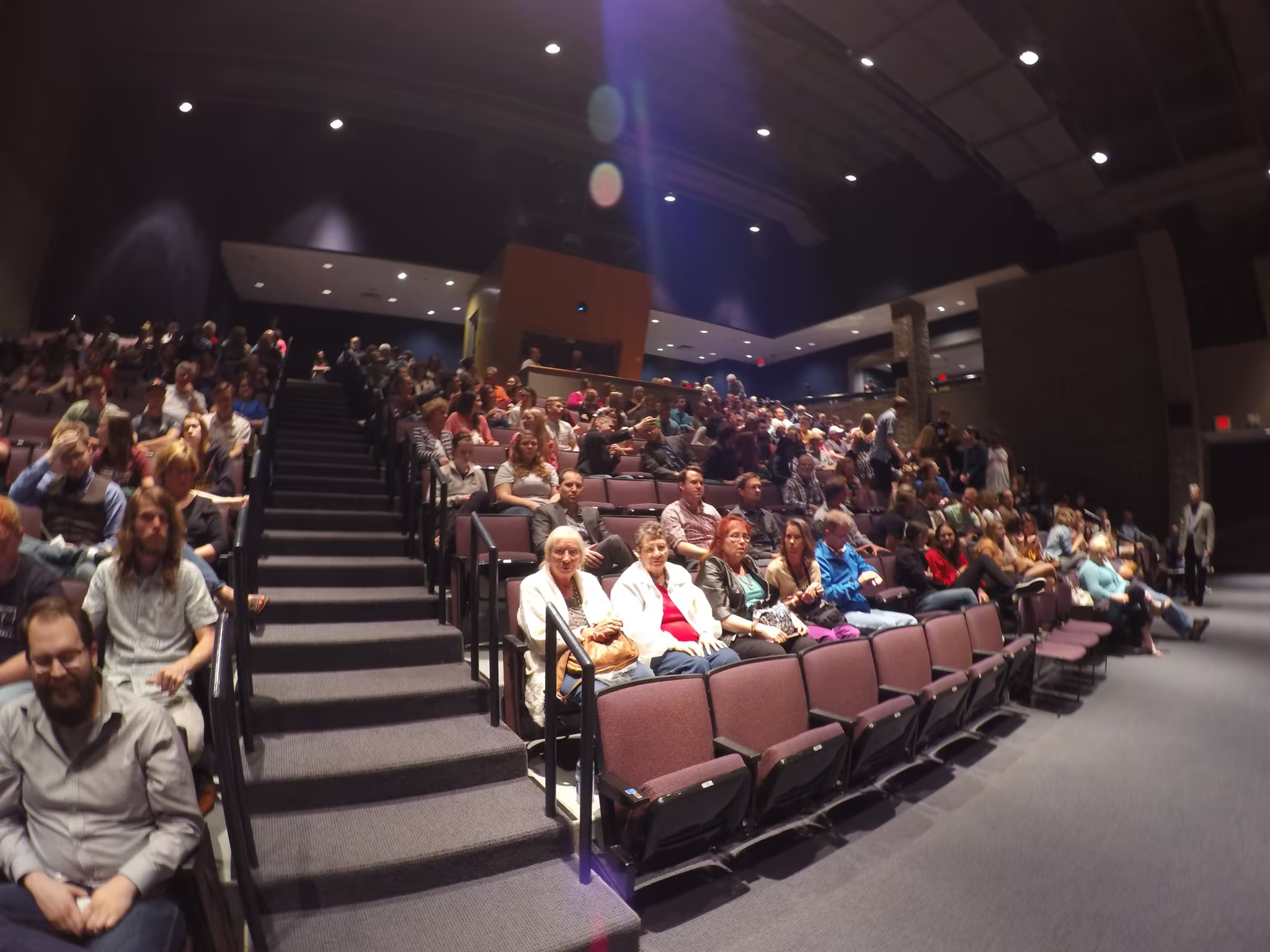
The end of college. A theater. A crowd. The film ran. People reacted to the beats we'd been building toward for almost a year. It is, to this day, the single longest project I've ever shipped.
College ended. I was freelancing full time. New site. New cards. A whole 2015 demo reel cut specifically to land me freelance gigs. I was technically a "videographer", but in practice the gigs would shape-shift — sometimes it was a logo animation, sometimes a kickstarter video, sometimes a promotional motion-graphics piece, sometimes a wedding film, sometimes a WordPress theme.
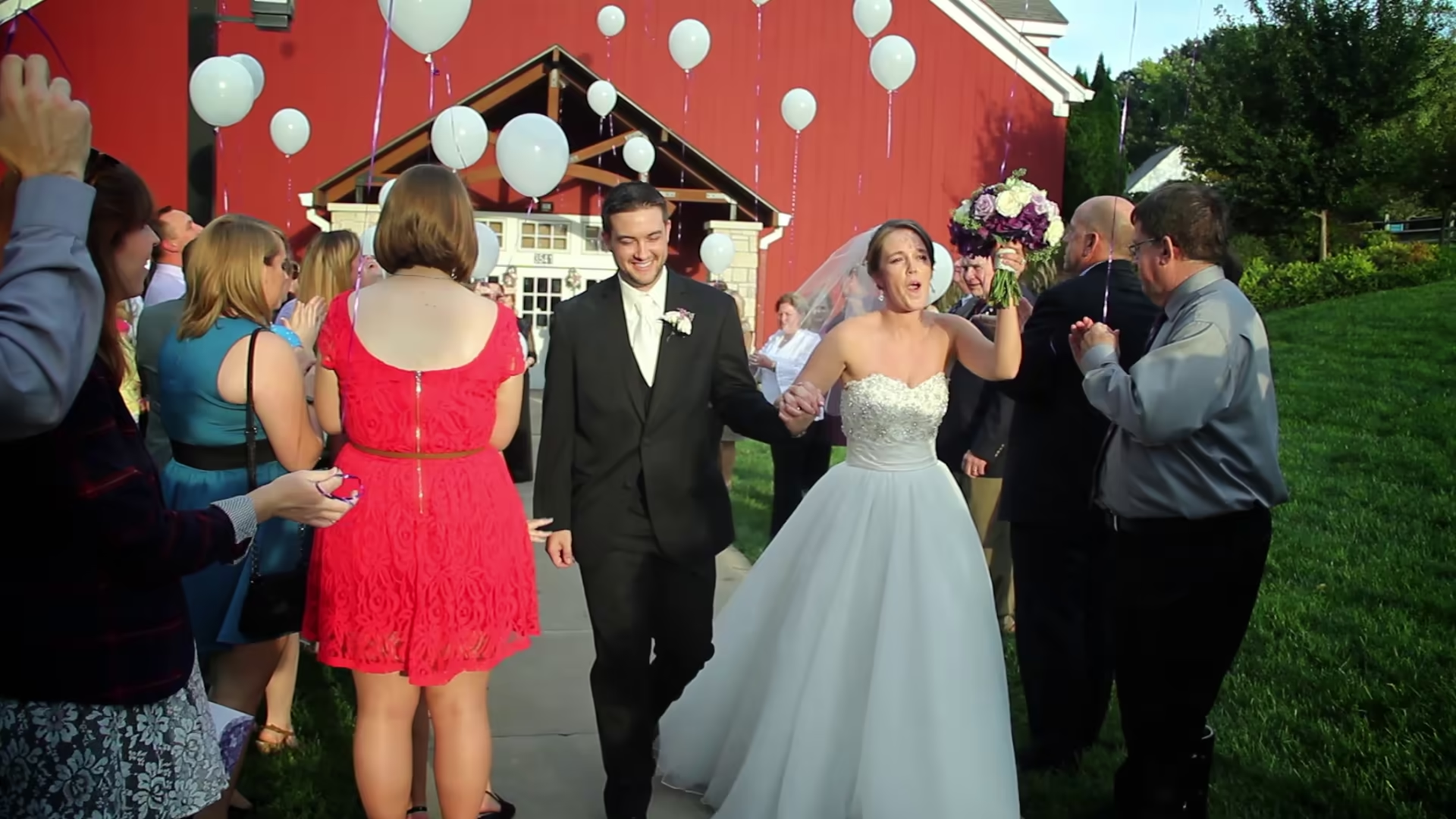
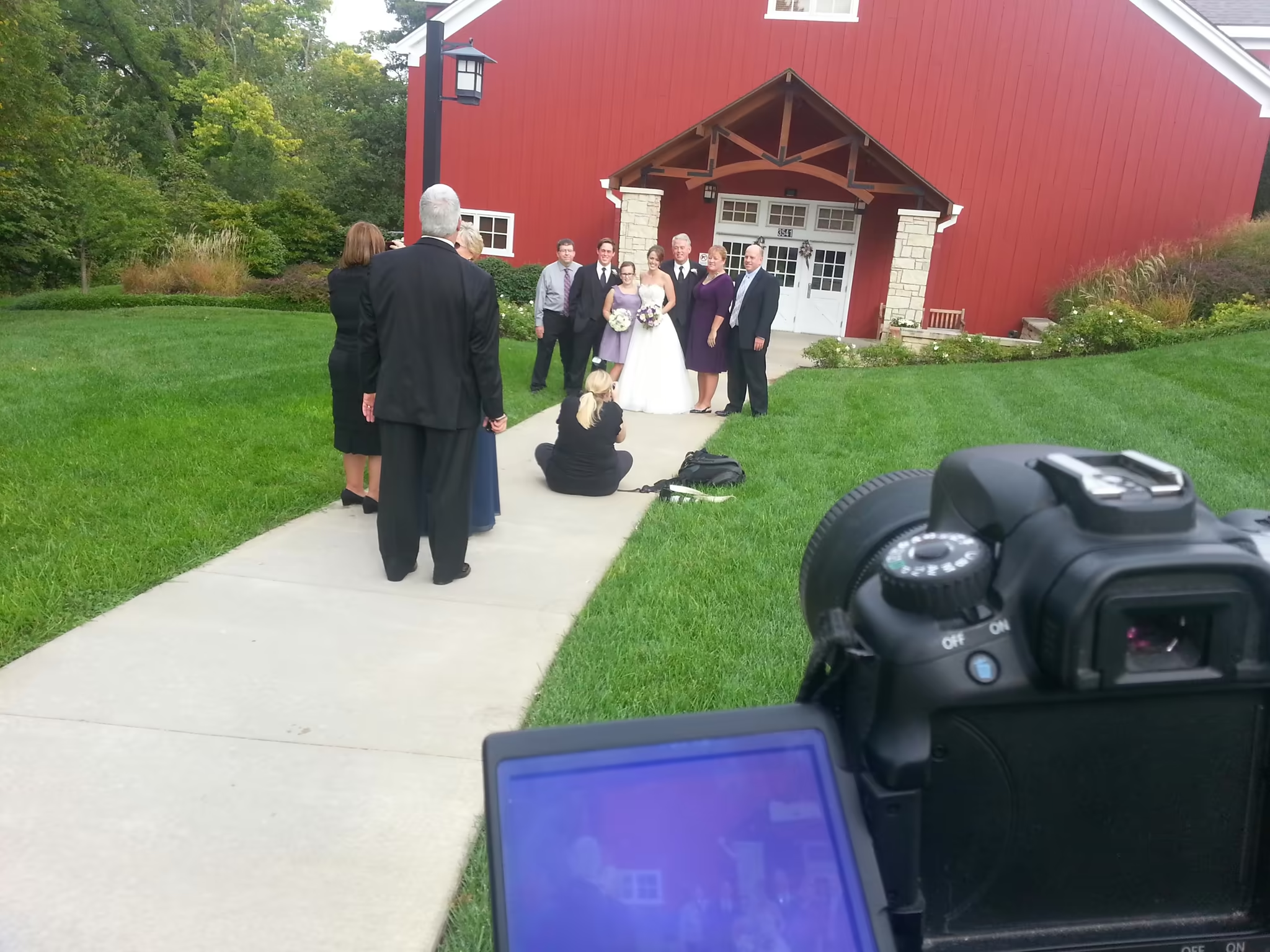
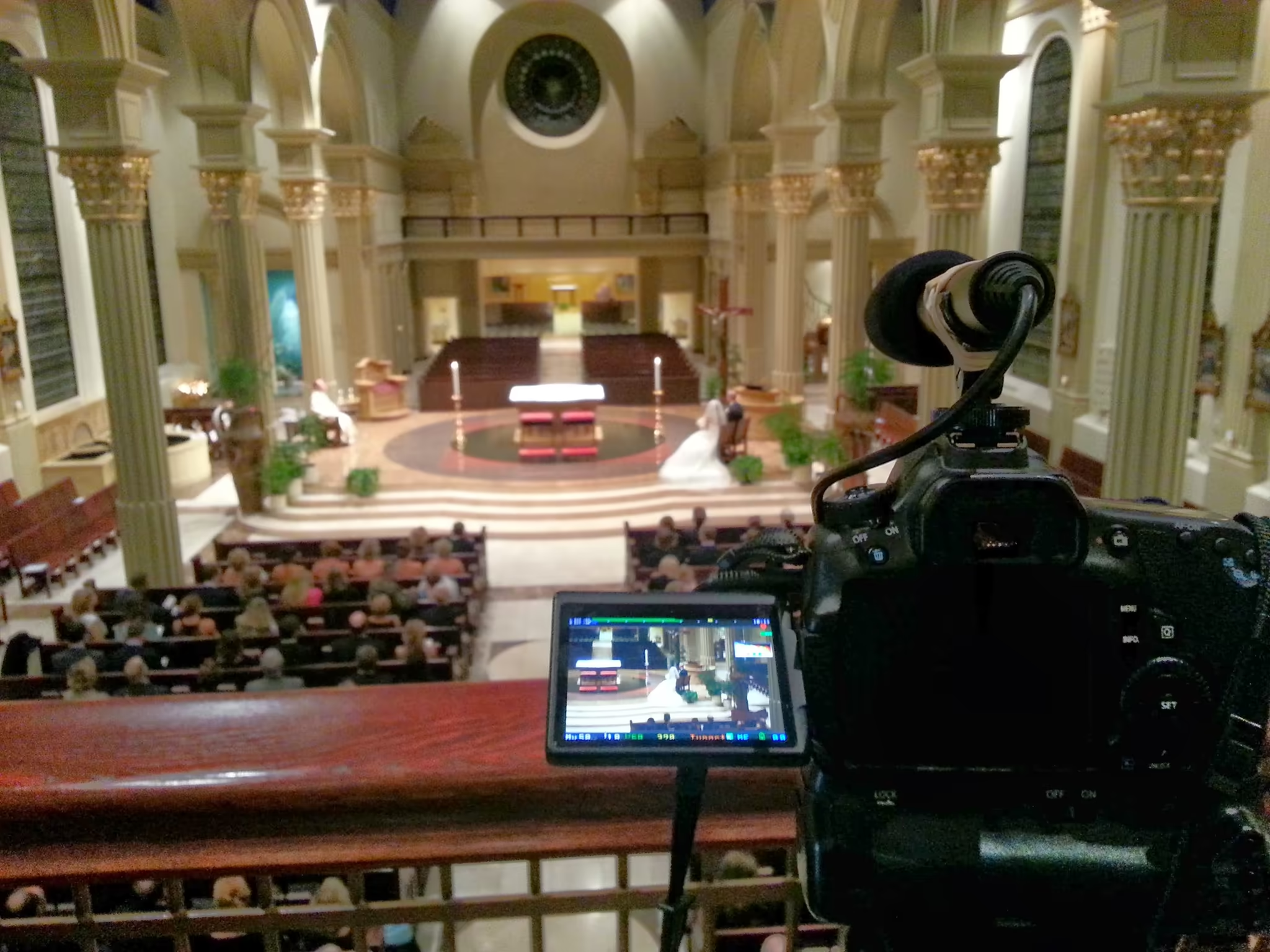
Most freelance videographers eventually get to wedding films. I did too. Kevin and I tried to spin a wedding business out of it called Schwikes — I'd shoot, he'd DJ. It didn't really work. The wedding films themselves did, though.
Brand work, motion graphics, logo animations, promos. A taste:
A handful of small-business marketing sites I designed and built during this stretch. All of these still load — open them up.
Somewhere in this stretch I stopped thinking of myself as a freelancer and started thinking of myself as an entrepreneur. I wanted to build products, not deliver projects. I wanted to make things that could keep running without me there. Some worked. Some didn't. Almost all of them taught me a thing I used in the next one.
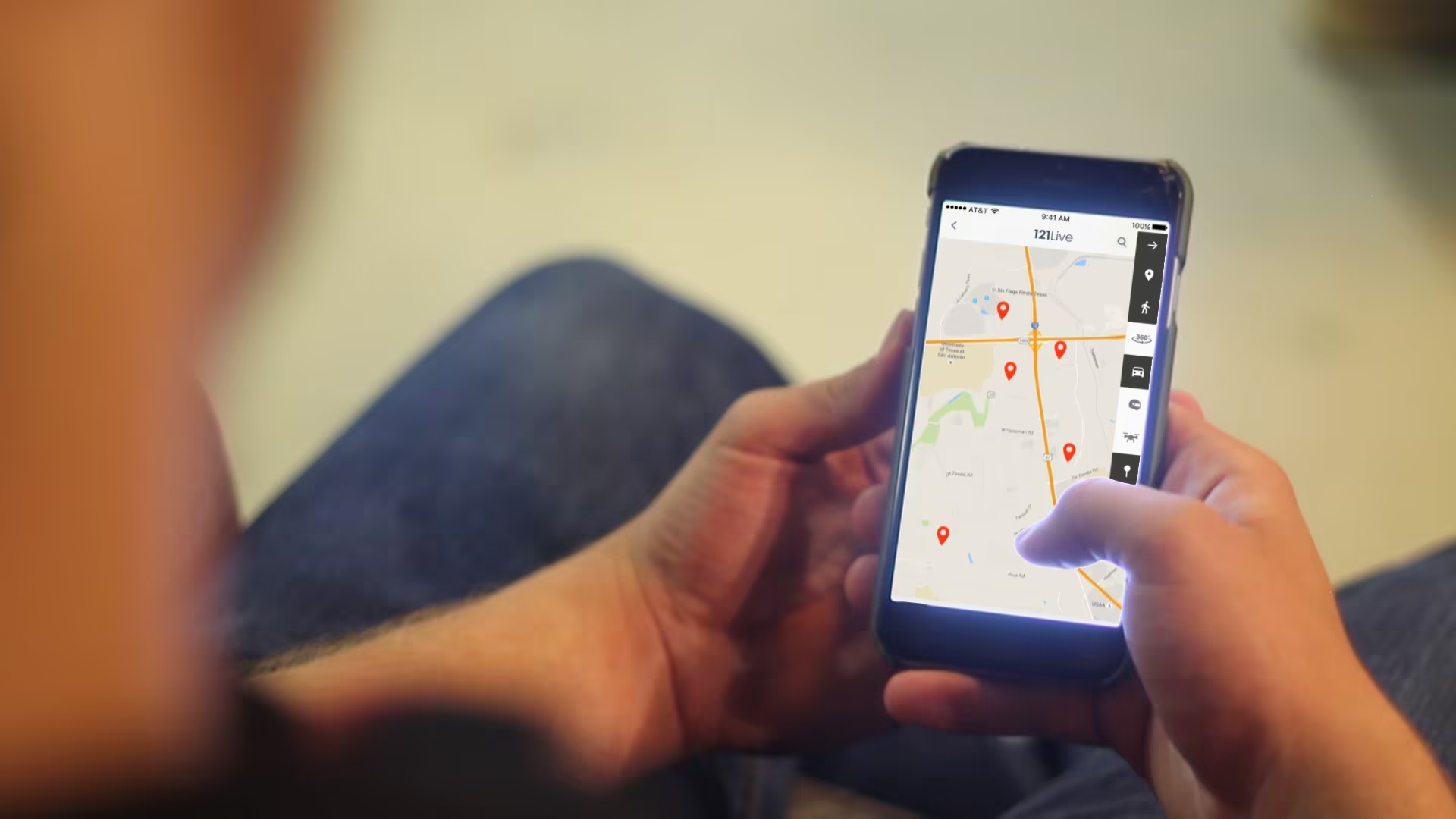
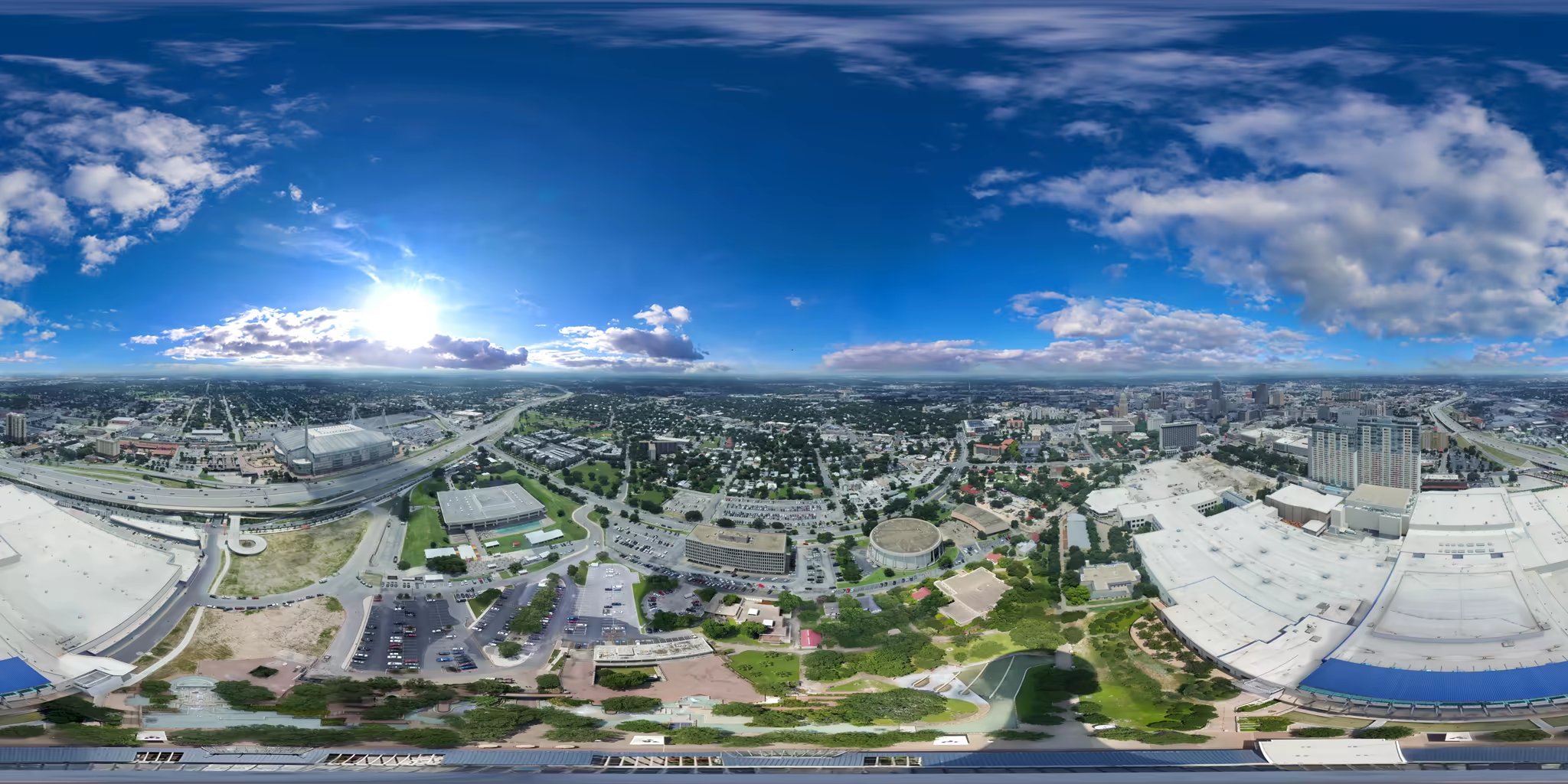
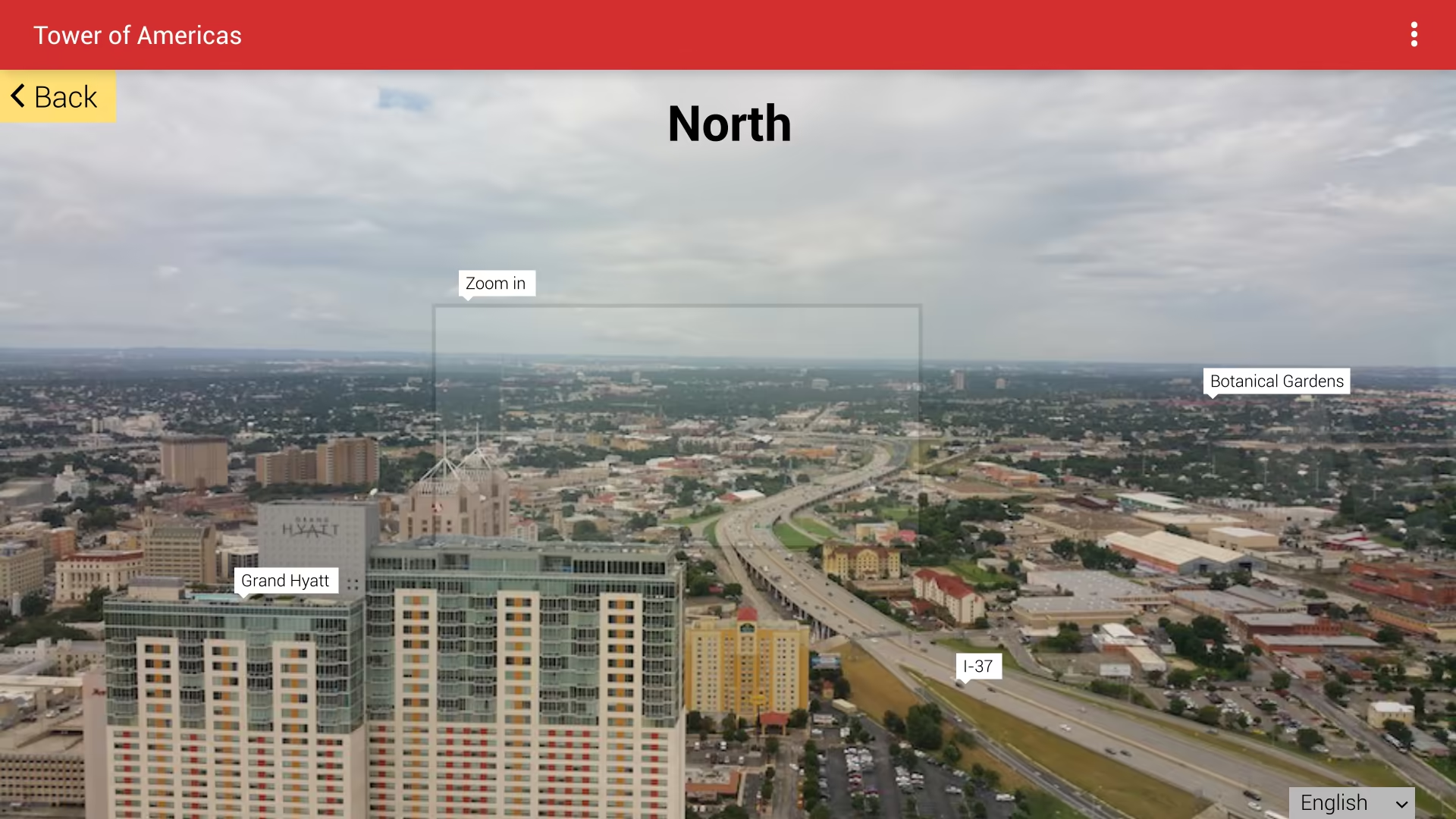
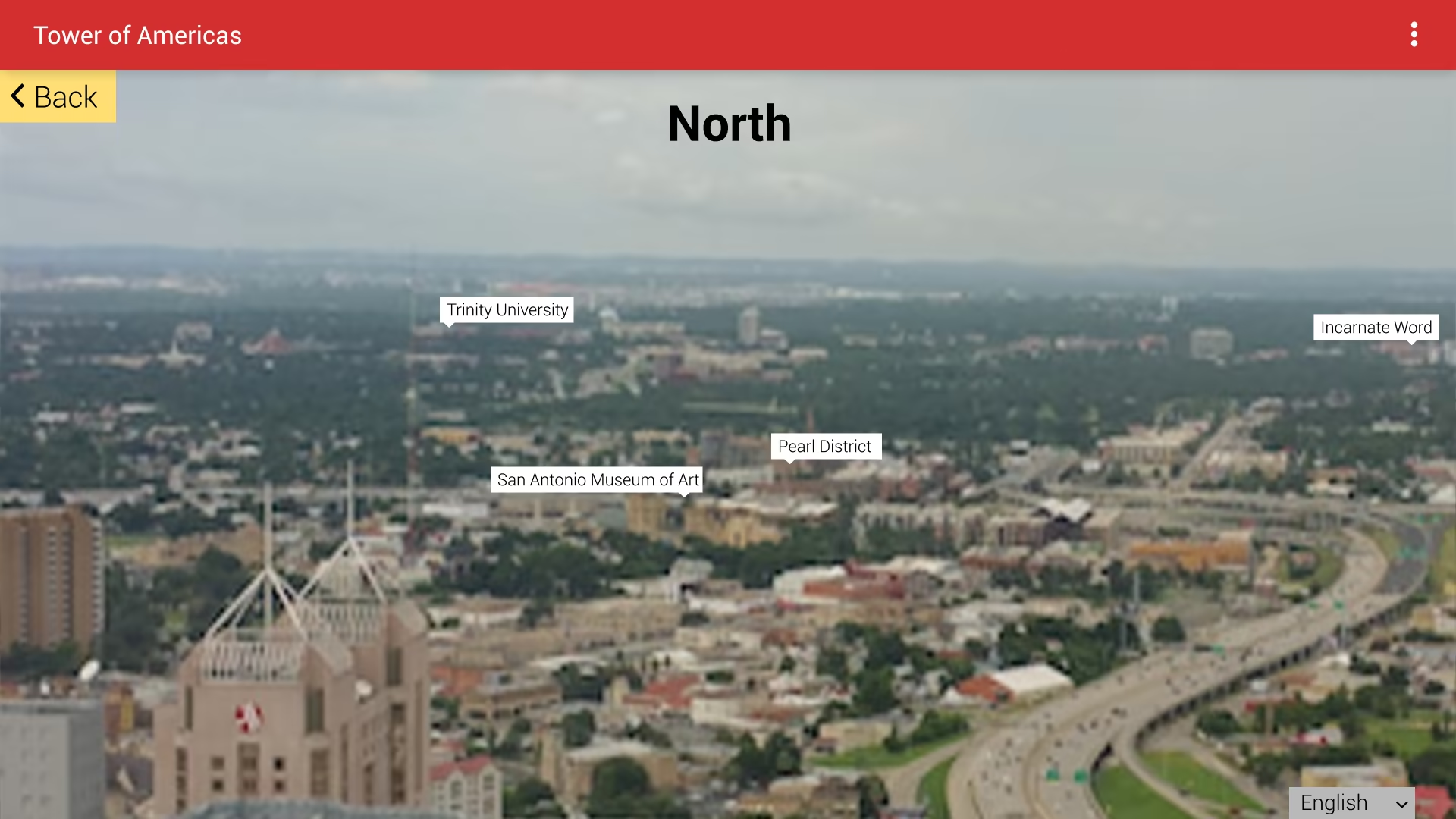
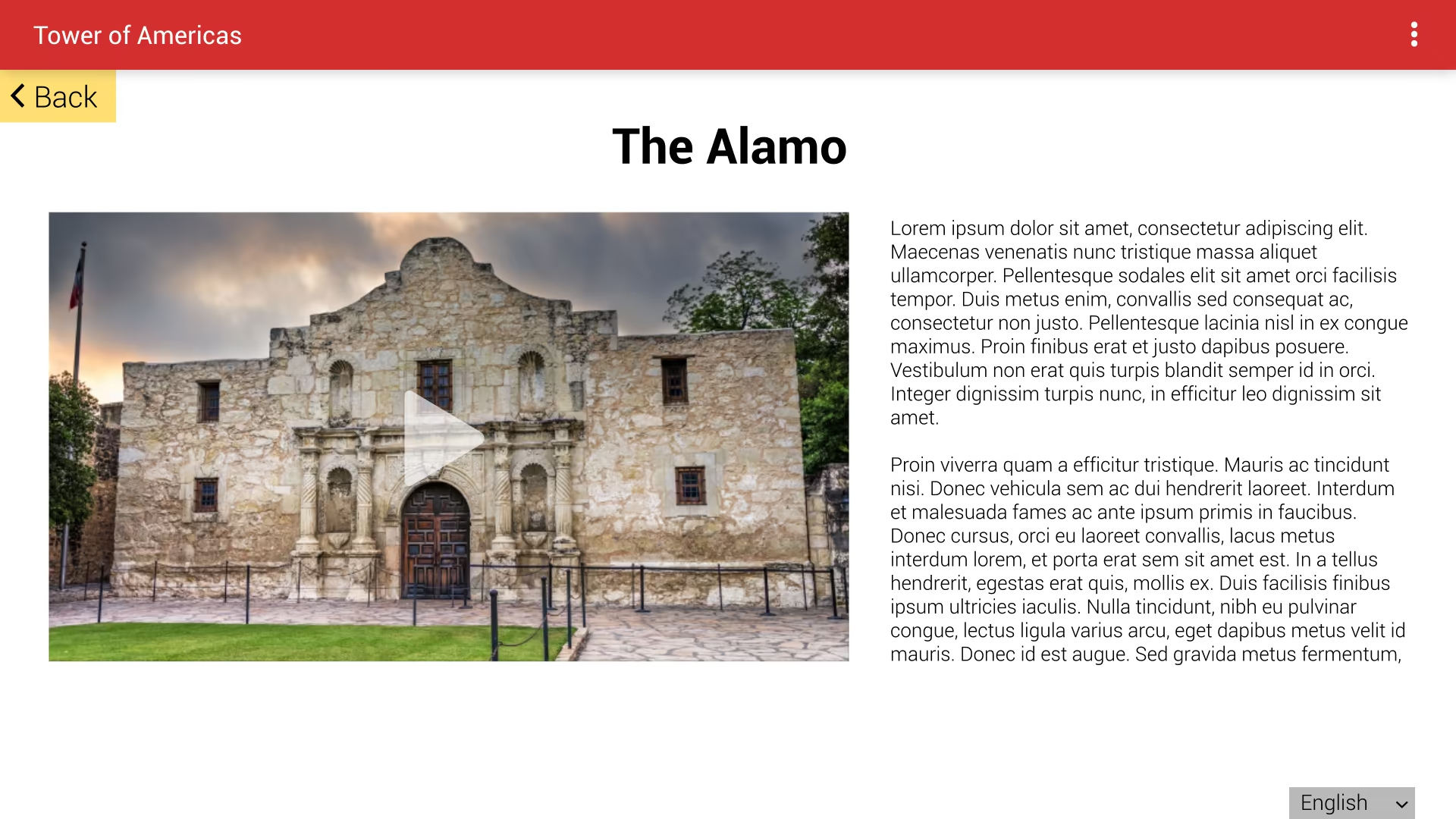
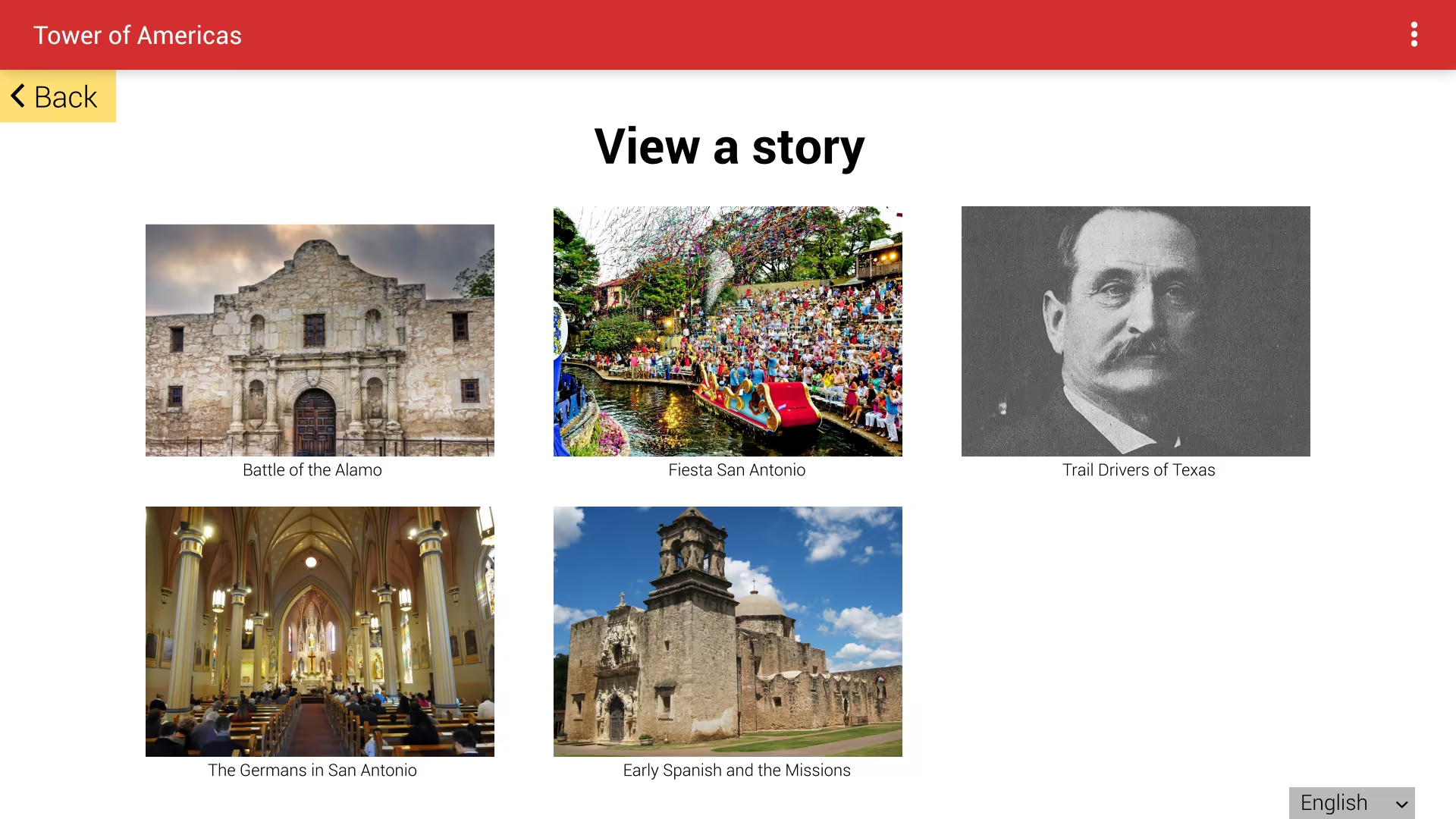
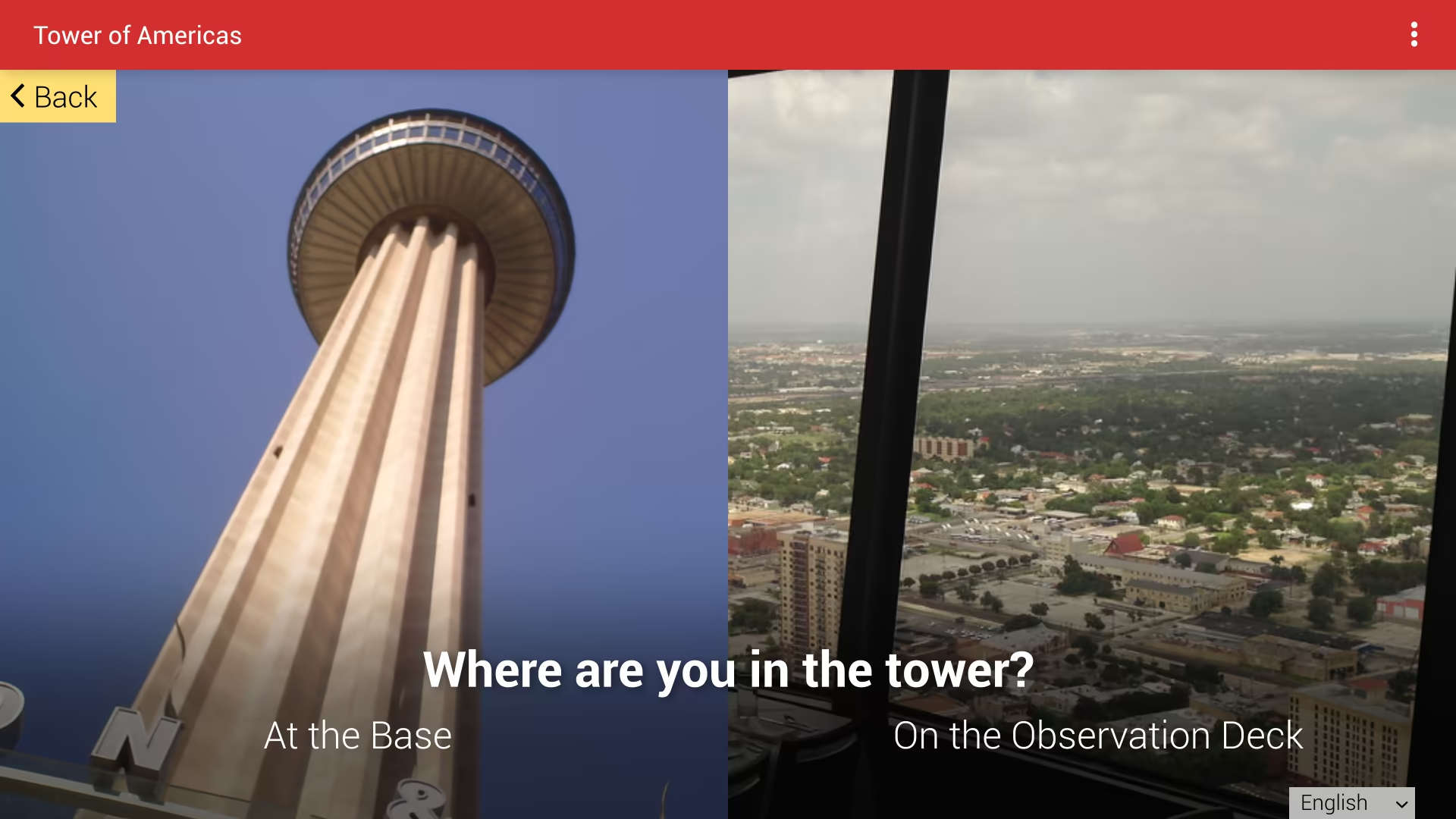
The Tower of the Americas (in San Antonio) hired me to build an immersive companion app. The idea: visitors get a tablet on a kiosk mount, point it where they're looking out the windows, and the app shows them a 360 panorama with landmark labels they can tap to learn more.
I went up the tower, shot photos in every direction, stitched them into a massive 360 panorama, and built the whole thing in Angular. The tablet's compass tracked which way it was pointed and matched that to the panorama angle. Tap a landmark, get a video and info card.
A swipe-based flashcard game to onboard waiters and bartenders. A restaurant owner sets up their menu and drinks in an admin dashboard, then invites new hires. The new hire learns through a quick flashcard game with left/right swipes, points for correct answers, points for speed, and immediate review of anything they got wrong. Owners see employee progress in the dashboard.
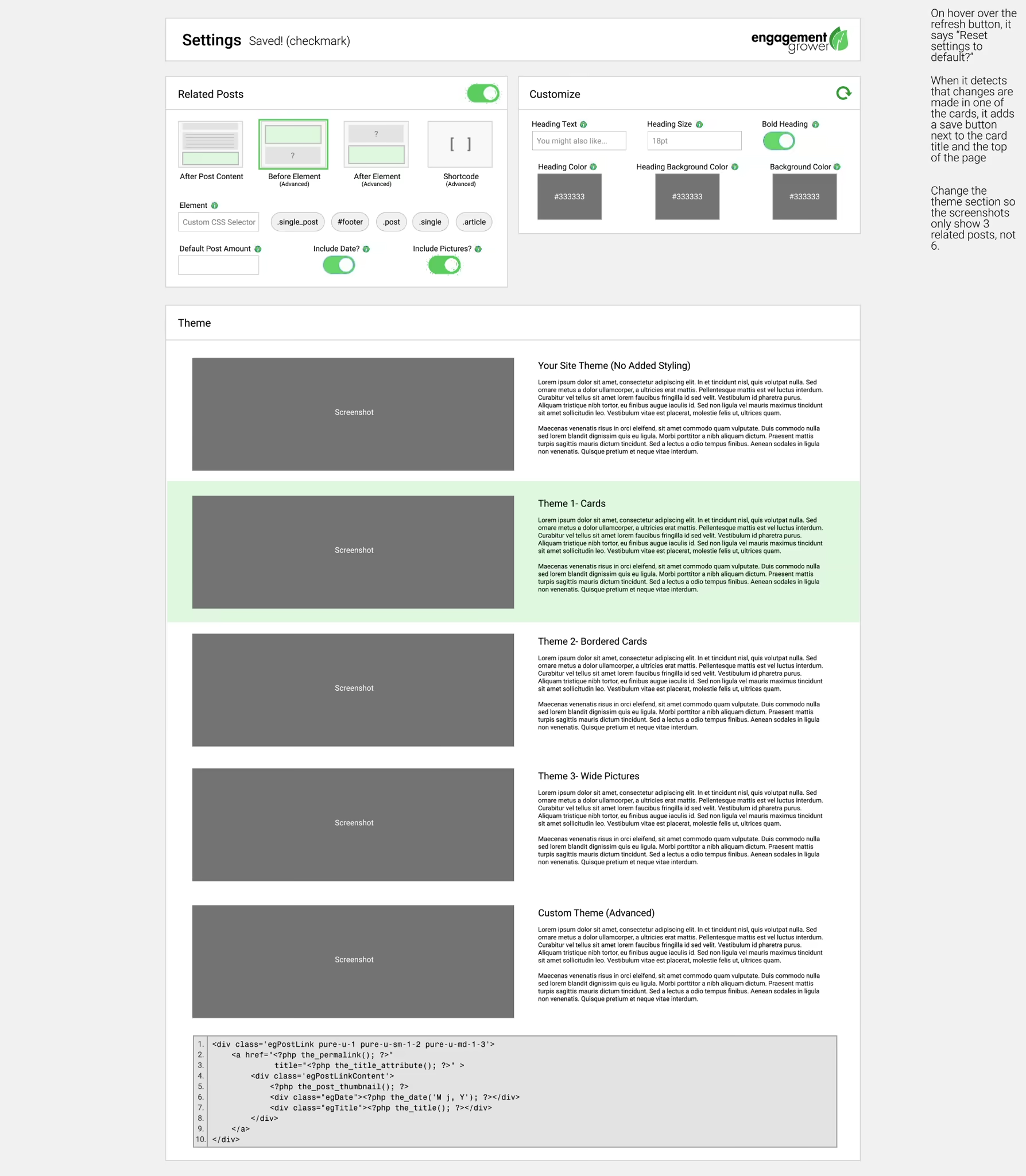
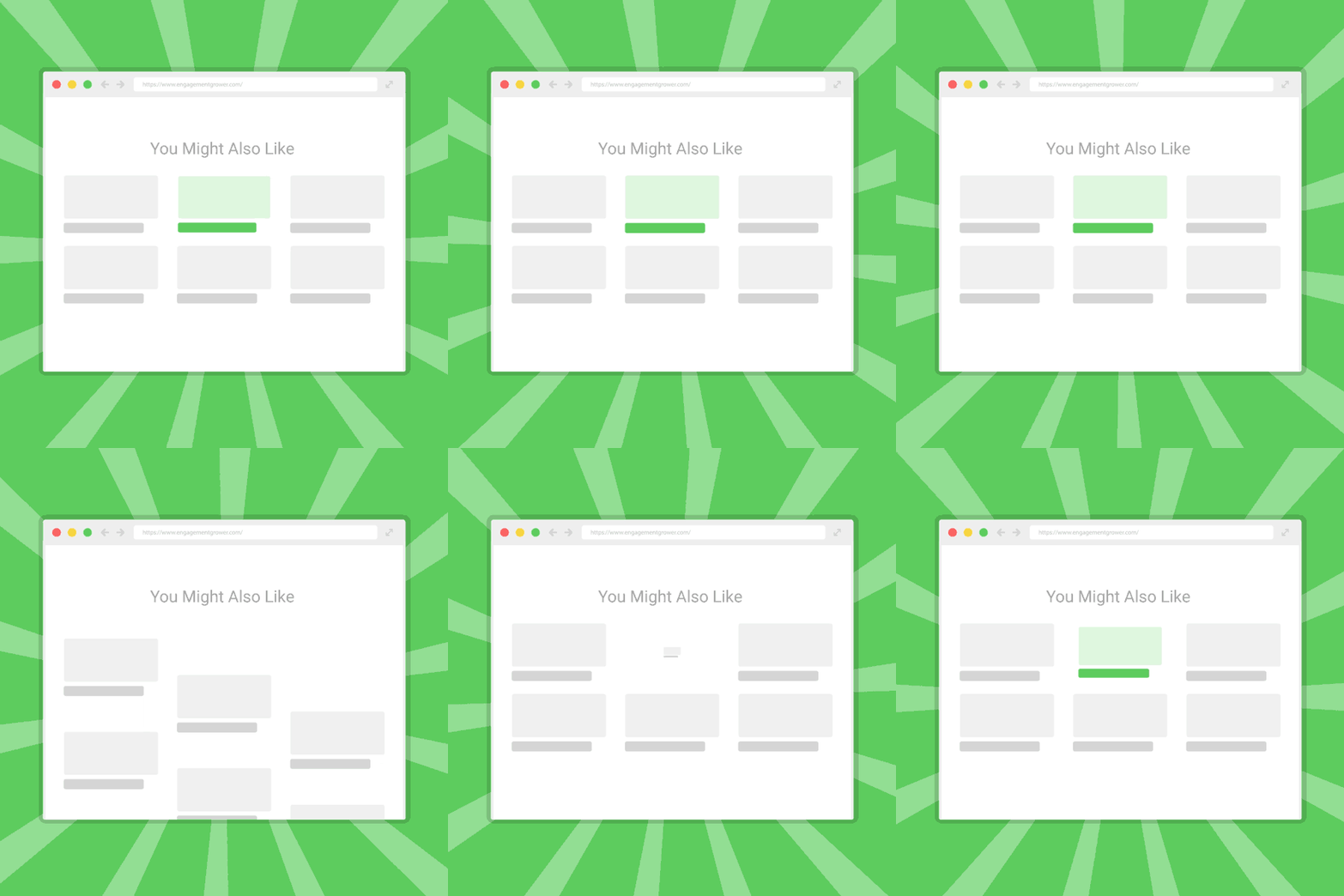
A WordPress plugin that picks suggested posts intelligently. It tracks impressions, clicks, and bounce rate on each suggestion, builds a model from that data, and serves the ones with the best signal. The plugin didn't break out commercially. The data pipeline was a good build.
Spun out of the Engagement Grower work — we partnered with Wyoti to build custom WordPress sites and plugins for clients. A solid bridge between freelance and product.
A planner builder that generates highly customizable PDFs with internal links, designed for devices like the reMarkable. Originally called "Remarkably Organized". Open-sourced. 200+ stars on GitHub. Built with Svelte.
You're given 8 letters. One is a decoy. Unscramble the other 7 into the day's word. Letters animate on like a split-flap display — I spent a stupid amount of time hand-crafting the look and feel of that animation. Made for fun, not for money.
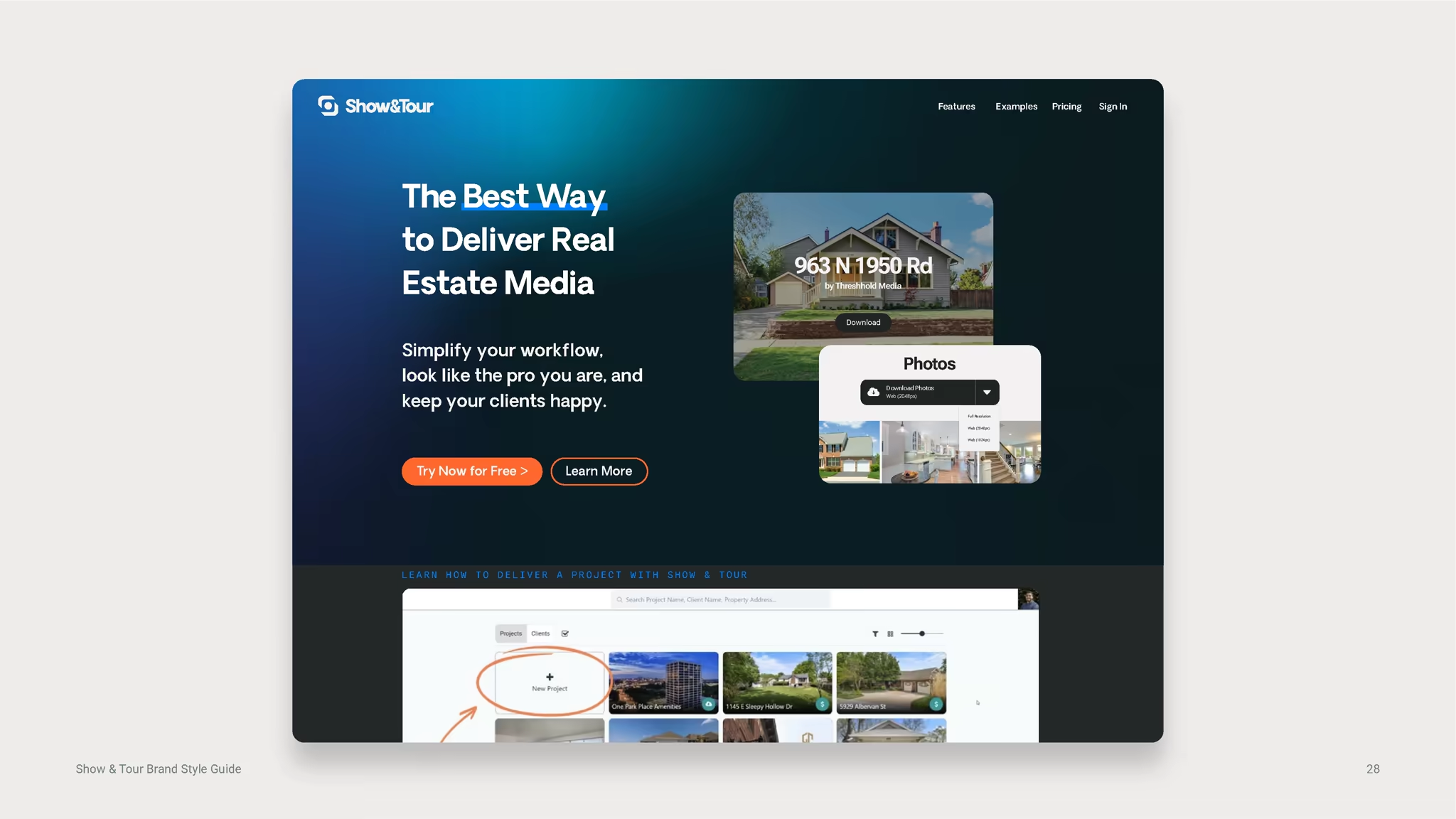
The best way to deliver real estate media.
Josh and I started Show&Tour in 2019. It's a project delivery platform for real estate photographers — beautiful property websites, branded delivery pages, smart invoicing, and a workflow built around how photographers actually work.
This is my full-time job now. We have thousands of users. I'm incredibly proud of what we've built.
Premium project delivery experiences where clients can download files, pay invoices, and view licensing — all branded as the photographer.
MLS-compliant virtual tours and property sites with thoughtful, beautiful layouts.
Optional gate that requires clients to pay the invoice before downloading the media. Never get paid late again.
Your brand, your domain, your SSL, your terms. We sit invisibly behind it.
QuickBooks, Stripe, Square. Invoices stay synced across the tools photographers already use.
Unlimited property sites, deliveries, and clients. No per-seat math.
Where photographers run their business day to day.
What the photographer's clients actually see.
A fast, minimal terminal UI for managing GitHub.
Triage your inbox without leaving the terminal. Open PRs, comment, review, merge — all keyboard-first.
github.com/brianschwabauer/ghtui
Intelligent curation for action-camera footage.
Processes huge volumes of footage automatically: drops pocket shots, surfaces high-quality clips and stills, and picks out moments where children are smiling or laughing. Mostly used to wrangle GoPro footage from family trips.
github.com/brianschwabauer/videocurator
schwabauer.family is where the rest of my life lives. Wedding photos and films. Blog posts. Family photos. A short film I made for fun called "Socially Distant Halloween". Photos of the treehouse I've been building in the backyard. Our family cookbook (with the PDF you can download). The renovation of our house. The slow domestic accretion that turns out to be most of life.
schwabauer.familyI started this page in 2006 with a stuffed-animal puppet show on a miniDV tape. I'm wrapping it up in 2026 with a property delivery platform that pays my bills. Somewhere in between, every "useless" detour — Flash games, fake newscasts, lego stop-motion, Hall View, NODE, the Pacman PowerPoint trick — became a piece of the next thing.
The loop hasn't changed. Pick a thing I've never done. Try it. Fail in public. Add it to the toolbag. Use it later in something that matters more.
— Brian